Michael Jackson
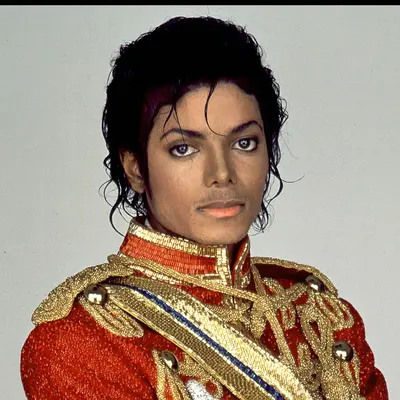
Who Was Michael Jackson?
Michael Joseph Jackson was not just a singer. He was not just a dancer. He was a phenomenon unlike anything the world had ever seen before.
Known as the “King of Pop,” Michael Jackson was one of the most influential cultural leaders of the 20th century. His contributions to dance, fashion, and music throughout a four-decade career elevated him to a universally recognized figure in popular culture.
Michael Jackson remains one of the most commercially successful recording artists in history. He has sold an estimated 350 million records worldwide, scored 13 No. 1 singles on the Billboard Hot 100 as a solo artist, and holds the record for the best-selling album of all time with Thriller, which has sold more than 70 million copies worldwide.
Born on August 29, 1958, in Gary, Indiana, and passing away on June 25, 2009, Michael left the world too soon. However, his music, his moves, and his message have never stopped resonating. Furthermore, in 2026, his legacy surged once again — with a billion-dollar biographical film bearing simply his name.
Early Life: Gary, Indiana, and a Childhood on Stage
A Working-Class Family With Extraordinary Talent
Michael Joseph Jackson was born on August 29, 1958, in Gary, Indiana. Jackson, the eighth child of the Jackson family, made his professional debut in 1964 as a member of the Jackson 5 alongside his older brothers Jackie, Tito, Jermaine, and Marlon.
The Jacksons were a large, working-class family. Michael grew up alongside his brothers and sisters, including notable siblings like Jermaine Jackson and Janet Jackson. Growing up in a small house on Jackson Street in Gary, Michael’s early life was marked by close family bonds and a shared love of music.
Michael Jackson had nine siblings, including his famous brothers Jackie, Tito, Jermaine, Marlon, and Randy, as well as sisters Rebbie, La Toya, and Janet. His lesser-known brother Brandon died shortly after birth in 1957.
A Father’s Strict Regime
From the very beginning, Michael’s father Joe Jackson drove his children relentlessly. In 1966, steel worker Joseph Jackson assembled his sons Jackie, Tito, Jermaine, Marlon, and Michael into the musical band the Jackson 5, with Michael on lead vocals. After months of grueling rehearsals involving corporal punishment from Joseph, the Jackson 5 performed at gigs until Suzanne De Passe discovered them in Chicago in 1968, and they were signed with Motown a year later.
The Jackson 5: A Star Is Born
Motown Magic (1969–1975)
By January 1970, “I Want You Back” rocketed to number one on both the pop and R&B charts, and the Jackson 5 became a sensation, crossing over from R&B to AM pop radio with ease. Two more hits followed — “ABC” and “The Love You Save” — before “I’ll Be There” revealed Michael’s facility with ballads. All three of these sequels went to number one.
Jackson (aged 11 years, 155 days) is the youngest vocalist ever to top the Hot 100. As part of the Jackson 5, he topped the charts with “I Want You Back” on the week of January 31, 1970.
Moreover, striking while the iron was hot, Motown spun Michael off into a solo act. His first solo single, “Got to Be There,” arrived at the end of 1971, reaching number four on the Billboard Hot 100, and then a cover of Bobby Day’s “Rockin’ Robin” peaked at number two in early 1972. Later that year, “Ben” earned Jackson his first Oscar nomination for Best Original Song.
Solo Career: The Making of the King of Pop
Off the Wall (1979): The Breakthrough
Off the Wall was the 1979 album that definitively established Michael Jackson as a force of his own. Collaborating with producer Quincy Jones and songwriter Rod Temperton, Jackson consciously attempted to appeal to multiple audiences. Anchored by a pair of number one hits — the incandescent “Don’t Stop ‘Til You Get Enough” and “Rock with You” — the record turned into a smash, peaking at four on the Billboard 200 and selling millions of copies.
Jackson holds the record for the artist with the highest number of best-selling albums. To date, he is the first and only artist to have five of his solo albums sell over 20 million copies worldwide: Off the Wall (20+ million), Thriller (70 million), Bad (35+ million), Dangerous (32+ million), and HIStory: Past, Present and Future, Book I (20 million).
Thriller (1982): The Greatest Album of All Time
Then came Thriller — and nothing in popular music was ever the same again.
Thriller spent 37 weeks at No. 1 on the Billboard 200 and is the best-selling album of all time with over 70 million copies sold worldwide.
His music videos for “Beat It,” “Billie Jean,” and “Thriller” from his 1982 album Thriller are recognized for shattering racial barriers and elevating the genre as both an art form and a marketing tool.
The album earned Michael a record-breaking eight Grammy Awards in 1984, including Album of the Year, further cementing its place in music history.
The Moonwalk: A Moment That Stopped the World
Michael Jackson popularized the Moonwalk dance move, first performing it at the “Motown 25: Yesterday, Today, Forever” TV special in 1983. The Moonwalk remains one of the most iconic moments in live entertainment history.
It was more than a dance move. It was a declaration. Through it, Jackson told the world that the King of Pop had arrived — and he was here to stay.
Bad (1987): Five Number Ones in a Row
In contrast to Bad, which was the first album to yield five U.S. Billboard Hot 100 number-one singles, Thriller became the best-selling album of all time.
The Bad World Tour (1987–1989) drew 4.4 million attendees and grossed $125 million. At its conclusion, Guinness recognized it as the highest-grossing and largest-attended tour in history at the time.
Dangerous (1991): Art Meets Activism
The Dangerous World Tour ran from June 27, 1992, to November 11, 1993, across 70 shows with an attendance of nearly 4 million people. All profits were donated to various charities, including Jackson’s own Heal the World Foundation.
HIStory (1995) and Invincible (2001)
He continued to innovate with the videos for the albums Bad (1987), Dangerous (1991), and HIStory: Past, Present, and Future, Book I (1995), and contributed to MTV’s popularity.
Invincible (2001) was a slick contemporary release that preceded his untimely death in 2009.
Studio Discography at a Glance
| Year | Album | Label | Notable Achievement |
|---|---|---|---|
| 1972 | Got to Be There | Motown | Debut solo album |
| 1972 | Ben | Motown | Oscar-nominated title track |
| 1979 | Off the Wall | Epic | 20M+ copies sold |
| 1982 | Thriller | Epic | Best-selling album of all time (70M+) |
| 1987 | Bad | Epic | First album with 5 US #1 singles |
| 1991 | Dangerous | Epic | 32M+ copies sold |
| 1995 | HIStory: Past, Present & Future, Book I | Epic | 20M+ copies sold |
| 2001 | Invincible | Epic | Final studio album |
Records and Achievements: Numbers That Defy Belief
Jackson is recognized as the “Most Successful Entertainer of All Time” by Guinness World Records, selling over 500 million records around the world.
He holds 39 Guinness World Records, including “Most Successful Entertainer of All Time” and the record for supporting the most charities of any pop star.
His career achievements include 13 Grammy Awards, 26 American Music Awards, and 40 Billboard Music Awards.
He was inducted into the Rock and Roll Hall of Fame twice — first with The Jackson 5 in 1997 and later as a solo artist in 2001.
He has been inducted 12 times into various music halls of fame — more than any other act.
He scored 13 No. 1 singles on the Billboard Hot 100 as a solo artist, including “Billie Jean,” “Beat It,” and “Black or White.”
Philanthropy: A Heart as Big as His Talent
Michael Jackson’s generosity was as extraordinary as his artistry. In recognition of his extensive humanitarian work, Jackson received numerous awards, including two honors from U.S. presidents. His philanthropic achievements are also acknowledged in the Guinness World Records, cementing his legacy as one of the most charitable figures in entertainment history.
Heal the World Foundation
Among his greatest achievements off the stage was the founding of the Heal the World Foundation, through which Jackson directed millions of dollars and personal time toward children in need worldwide.
In June 1999, “Michael Jackson and Friends” concerts in Korea and Germany raised $3.3 million dollars for the humanitarian agencies UNESCO, Nelson Mandela’s Children’s Fund, and the International Federation of Red Cross and Red Crescent Societies.
On September 4, 1999, Michael presented Nelson Mandela with a cheque for 1,000,000 South African rand for the Nelson Mandela Children’s Fund.
Furthermore, Neverland Ranch — his personal estate — was regularly opened to terminally ill, underprivileged, and abused children. Michael had kids visiting the ranch for 6 to 7 months out of the year.
Personal Life: Love, Family, and Fatherhood
Marriages
Michael Jackson was married twice. Lisa Marie Presley, daughter of rock icon Elvis Presley, married Michael Jackson in 1994. Their marriage lasted for less than two years, ending in divorce in 1996.
Debbie Rowe was a nurse who worked in the office of Michael Jackson’s dermatologist, and they were married from 1996 to 2000.
His Three Children
Family was everything to Michael. Michael’s first child, Michael Joseph Jackson Jr., was born to the musician and nurse Debbie Rowe on February 13, 1997. He was nicknamed “Prince.”
The Grammy winner welcomed a second child, daughter Paris, with Rowe on April 3, 1998. His third child, Prince Michael Jackson II, arrived via surrogate on February 21, 2002. He quickly garnered the nickname “Blanket” and now goes by Bigi.
His attorney Tom Mesereau remarked: “I never saw a more doting father in my life. Absolutely loved his kids, and they loved him.”
Neverland Ranch
Jackson transformed the 2,700-acre property into a “magical land where children never grow up.” In addition to a 13,000-square-foot Tudor-style main residence, a 5,500-square-foot movie theater, and a four-acre lake, the premises also boasted a full-fledged amusement park.
Death: The World Mourns Its King
He was preparing for a series of high-profile concerts that he hoped would spark a comeback when he died suddenly of cardiac arrest on June 25, 2009.
His death prompted a widespread outpouring of grief from his fans that culminated in a memorial celebration of his life on July 7 at the Staples Center in Los Angeles, featuring tributes by Stevie Wonder, Berry Gordy Jr., Brooke Shields, and Al Sharpton.
In August 2009, the coroner ruled Jackson’s death a homicide. The cause was a lethal combination of sedatives and propofol, an anesthetic. In November 2011, Jackson’s personal physician was found guilty of involuntary manslaughter.
Legacy: The King Lives On
Posthumous Albums
A handful of posthumous albums were released in the years after Jackson’s death. The first, Michael, was released in December 2010. The second, Xscape (2014), featured R&B singer Usher performing the single “Love Never Felt So Good.”
The 2026 Biographical Film Michael
His legacy received its most explosive tribute in 2026. The biographical film Michael (2026) was directed by Antoine Fuqua. Jaafar Jackson — Michael Jackson’s real-life nephew — portrayed Michael Jackson in his acting debut, with Colman Domingo and Nia Long as his parents, Joe and Katherine.
It grossed $1.01 billion worldwide, making it the highest-grossing biographical film in history, the first biographical film to reach $1 billion, and the highest-grossing Lionsgate film of all time.
While headlines celebrated the “Michael” biopic earning $217 million globally in its opening weekend — the biggest worldwide debut for any biographical film in history, surpassing Oppenheimer — the movie’s success is a direct reflection of Jackson’s enduring gravitational pull.
Still Breaking Records Posthumously
Jackson became the first artist this decade to reach No. 1 posthumously on the Billboard Artist 100 chart — a feat rarely achieved by any legacy act.
Jackson retains the record for the most number-one albums among solo male artists.
His unique blend of soul, funk, and pop has inspired countless singers across multiple genres, including Usher and Beyoncé.
His music still plays. His dances are still learned. His name still stops conversations. Therefore, Michael Jackson was never just the King of Pop. He was — and remains — the heartbeat of modern music itself.