Tony Scott
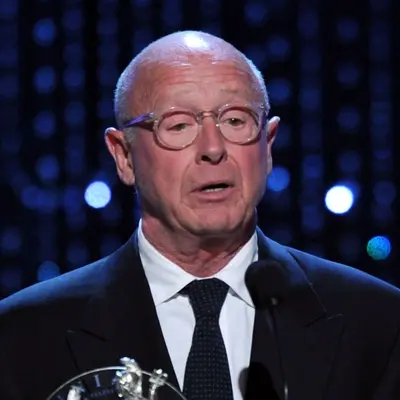
Who Was Tony Scott?
Anthony David Leighton Scott — known to the world simply as Tony Scott — was an English film director and producer. His kinetic visual style and command of large-scale action filmmaking made him one of Hollywood’s most commercially successful directors over a career spanning nearly three decades.
Tony Scott’s signature style was characterized by fast-paced editing, saturated colors, innovative camera angles, and a focus on visual intensity. He often employed techniques like slow motion, quick cuts, and close-ups to heighten the drama and create a sense of urgency.
He was known for directing highly successful action and thriller films such as Top Gun (1986), Beverly Hills Cop II (1987), Days of Thunder (1990), The Last Boy Scout (1991), True Romance (1993), Crimson Tide (1995), Enemy of the State (1998), Man on Fire (2004), Déjà Vu (2006), and Unstoppable (2010).
His films were more than entertainment. They were a visual language entirely his own.
Early Life: A Military Family, a Love of Cinema, and a Painter’s Soul
Born in Northumberland
Tony Scott was born in North Shields, Northumberland, England, to parents Jean and Colonel Francis Percy Scott. As a result of his father’s career in the British military, his family moved around a lot.
Their mother loved going to the movies and instilled a love of cinema in her children. This early exposure to film planted a seed. It would take decades to fully bloom. But when it did, it changed Hollywood forever.
He was the youngest of three brothers, one of whom is fellow film director Ridley Scott.
The Boy in the Frame: First Steps in Film
At age 16, Tony made his first appearance on screen as “the boy” in his brother’s directorial debut, the short film Boy and Bicycle (1965). Therefore, his relationship with cinema began not behind the camera — but in front of it.
In 1969, Tony directed his own short film One of the Missing about a soldier in the American Civil War. Even then, his storytelling instincts were clear. He was drawn to tension. He was drawn to urgency. He was drawn to conflict.
From Paint to Pixels: Education and Art School
Tony had a talent for art and painting. He spent a year at Leeds College of Art and Design and went on to study for a fine arts degree at the School of Art at the University of Sunderland.
He won a scholarship to study for his Master of Fine Arts at the Royal College of Art. Both Tony and Ridley graduated from the Royal College of Art in London. They were among a generation of British film directors who became successful in Hollywood, having started their careers making television commercials.
Following university, he spent several years as a painter. But life as a painter proved a struggle, so he decided to forge a different career path. That decision changed everything.
Career Beginnings: From Commercials to Hollywood
Joining Ridley Scott Associates
He partnered with Ridley in advertising at Ridley Scott Associates. It was there that he began shooting commercials.
Tony spent about 15 years making commercials. Moreover, Scott began his career directing commercials for major brands like Saab and Chanel. These years were not wasted. Instead, they sharpened his eye for visual impact. They taught him how to tell a story in seconds — a skill that would define his feature films.
The style they brought to movies was rooted in commercials and the emerging genre of music videos, where the director must think not simply in terms of scenes, but the impact of every shot.
Loving Memory (1971) and The Hunger (1983): The First Steps
In 1971, he wrote, produced, and directed Loving Memory. Then came his feature debut. While his first film, The Hunger (1983), opened to mixed reviews, his stunning visual style and Stephen Goldblatt’s lush cinematography marked the arrival of a filmmaker to watch.
The Hunger was a visually arresting vampire film that established his signature style and his ability to create a sense of mood and atmosphere on screen. It starred Susan Sarandon, David Bowie, and Catherine Deneuve. It wasn’t a critical success, but it attracted attention from Hollywood.
The Breakthrough: Top Gun (1986) and Hollywood Domination
The Film That Changed Everything
He was asked by producers Don Simpson and Jerry Bruckheimer to direct Top Gun (1986), starring Tom Cruise.
The result was a phenomenon. Top Gun in particular established a template for the high-concept, soundtrack-driven action blockbuster that was widely emulated throughout the late 1980s and 1990s.
Top Gun achieved the highest return on investment among his films, grossing over 23 times its budget and becoming the top-grossing film of 1986. Furthermore, the film’s influence extended beyond the box office. It was credited with boosting recruitment for the United States Navy and became a touchstone of 1980s American pop culture.
Tony took longer to get into feature films, but Top Gun established him as the go-to guy for the quick-cutting, violent, profane, and — above all — fast action picture, and a leading director of the new Hollywood studio system.
Beverly Hills Cop II (1987) and Days of Thunder (1990)
Success begets opportunity. He followed the success of Top Gun with the sequel Beverly Hills Cop II (1987) with Eddie Murphy, which was well received.
He would work again with Tom Cruise on another high-adrenaline film, Days of Thunder (1990), which proved less successful. Nevertheless, the film confirmed Scott’s ability to command major studio productions and work alongside the biggest stars in Hollywood.
The Peak Years: True Romance, Crimson Tide, and Enemy of the State
True Romance (1993): A Tarantino Collaboration
In 1993, he directed True Romance, which was written by emerging director Quentin Tarantino. Scott had a lot of control over the film and received some great reviews.
He also directed Quentin Tarantino’s script for True Romance, and had a good enough relationship with Tarantino on that picture to bring the young hotshot in on Crimson Tide for a rewrite. The result was one of the most critically appreciated films of Scott’s career.
Crimson Tide (1995): Submarine Tension at Its Finest
Crimson Tide became one of the most effective big-studio thrillers of its era. Additionally, in 1995, both Tony and Ridley received the BAFTA Award for Outstanding British Contribution to Cinema.
It was during the press for Crimson Tide that Tony Scott delivered one of his most memorable quotes. “The biggest edge I live on is directing,” he said. “That’s the most scary, dangerous thing you can do in your life.”
Enemy of the State (1998): His Biggest Decade Hit
His 1998 film Enemy of the State, a conspiracy thriller with Will Smith and Gene Hackman, was his highest-grossing film of that decade.
The Denzel Washington Years: A Partnership for the Ages
Tony Scott’s most celebrated professional relationship was with actor Denzel Washington. It was also his most productive.
Tony worked five times with Denzel Washington — on Crimson Tide (1995), Man on Fire (2004), Déjà Vu (2006), The Taking of Pelham 123 (2009), and Unstoppable (2010), Scott’s final film in the director’s chair.
Washington credited Scott’s direction with bringing out specific qualities in his performances, and the partnership is often cited alongside other notable director-actor collaborations in American cinema.
Man on Fire (2004): A Personal Vindication
Scott was set to direct the original Man on Fire (1987) based on A.J. Quinnell’s novel, but he was rejected by the producers because they believed he was not accomplished enough. Seventeen years later, Scott directed a new version of the same novel.
It was a quiet, powerful act of persistence. The 2004 Man on Fire — starring Denzel Washington and Dakota Fanning — became one of his most emotionally resonant and acclaimed films.
Unstoppable (2010): The Final Masterpiece
Unstoppable, again starring Washington with Chris Pine, was released in November 2010. It was tense. It was thrilling. It was Tony Scott at his most precise. It was also his last completed feature film.
Directing Style: The Visual Language of Speed
Tony Scott did not simply make movies. He invented a cinematic grammar.
Tony Scott’s influence on Hollywood action cinema is substantial. His directorial style — characterized by vivid color, aggressive editing, dynamic camera movement, and a focus on visceral, immediate thrills — helped define the aesthetic of the modern action film.
His background in art and design heavily influenced his visual style. He was always looking for new ways to experiment with cinematic techniques. Scott embraced technology and was known for incorporating new and innovative techniques into his films.
Tony always maintained that the secret to his and Ridley’s success was that they had contrasting styles, saying, “I think my films are more rock ‘n’ roll. I experiment more.”
Reflecting on his legacy, Tony shared: “I always get criticized for style over content, unlike Ridley’s films like Alien or Blade Runner or Gladiator that go right into the classic box right away. Mine sort of hover.”
Scott Free Productions and Television
Tony Scott was far more than a director. He was also a powerful producer.
He created the production company Scott Free Productions with his brother Ridley. Scott and his brother Ridley were partners in Scott Free, which in recent years was heavily involved in television. Their projects included the hit series Numb3rs and The Good Wife and the miniseries The Pillars of the Earth.
Aside from his feature filmmaking, Scott worked in television as a producer and director, going behind the camera for two episodes of a Showtime spinoff series based on The Hunger and directing one episode of Numb3rs in 2007.
Awards and Recognition
In 1995, both Tony and Ridley received the BAFTA Award for Outstanding British Contribution to Cinema. In 2010, they received the BAFTA Britannia Award for Worldwide Contribution to Filmed Entertainment.
His commercial achievements were equally impressive. Tony Scott became one of the most commercially successful directors of his generation, weathering the occasional heavy turbulence but delivering an overwhelming majority of huge commercial hits.
Personal Life: Three Marriages and Twin Sons
Tony Scott was married three times. He was survived by his third wife and their twin sons.
His three marriages were to:
Gerry Boldy (married 1967, divorced 1974); Glynis Staunton (married 1986, divorced 1987); and Donna W. Wilson (married 1994, until he died in 2012).
Donna W. Scott — born in 1968 as Donna W. Wilson in North Carolina — is an accomplished model and actress. She attended the University of North Carolina at Greensboro, where she majored in dance and communication. Their twin sons are named Max Scott and Frank Scott.
He also had family ties deeply embedded in the film industry. His nephew is Jake Scott, his niece is Jordan Scott, and his other nephew is Luke Scott — all children of Ridley Scott and all filmmakers in their own right.
Death and Legacy
August 19, 2012
Tony Scott died on August 19, 2012. According to news reports, he took his own life by jumping from the Vincent Thomas Bridge in southern California, which connects San Pedro and Terminal Island. He was 68 years old.
He left two suicide notes that have not been publicly disclosed. Police stated the notes do not explain his motivation. ABC News later reported that Scott had inoperable brain cancer at the time of his death, but the claim was refuted by Scott’s family.
When Tony Scott passed away, his unexpected death sent shockwaves through the Hollywood community. From there, the disbelief spread to friends, fans, and collaborators the world over.
A memorial service was held. Celebrities who attended included Tom Cruise, Val Kilmer, Eddie Murphy, Denzel Washington, Gene Hackman, Elijah Wood, Dane Cook, Dwayne Johnson, Stephen Fry, Peter Fonda, and Keira Knightley.
He was laid to rest at Hollywood Forever Cemetery.
His Lasting Legacy
Tony Scott’s legacy has been marked by critical reassessment in the 2010s and beyond, with retrospectives positioning him as a pioneering action stylist whose visually kinetic films anticipated post-cinematic techniques like digital effects and fragmented editing. Scholarly works and articles have highlighted his influence on subsequent directors, including Christopher McQuarrie, who paid tribute to Scott during the making of Top Gun: Maverick and emulated his intense, immersive filming style.
The sequel Top Gun: Maverick features a dedication to Tony Scott in its end credits, along with archival footage from the first film, honoring his visionary direction of high-octane aerial sequences. The film’s massive box-office success — grossing over $1.4 billion worldwide — reignited interest in the original Top Gun and affirmed Tony Scott’s foundational role in modern blockbuster cinema.
Complete Filmography
As Director
| Year | Film | Notable Stars |
|---|---|---|
| 1971 | Loving Memory (short) | — |
| 1983 | The Hunger | David Bowie, Susan Sarandon, Catherine Deneuve |
| 1986 | Top Gun | Tom Cruise, Val Kilmer, Kelly McGillis |
| 1987 | Beverly Hills Cop II | Eddie Murphy, Judge Reinhold |
| 1990 | Days of Thunder | Tom Cruise, Nicole Kidman |
| 1990 | Revenge | Kevin Costner, Anthony Quinn |
| 1991 | The Last Boy Scout | Bruce Willis, Damon Wayans |
| 1993 | True Romance | Christian Slater, Patricia Arquette |
| 1995 | Crimson Tide | Denzel Washington, Gene Hackman |
| 1996 | The Fan | Robert De Niro, Wesley Snipes |
| 1998 | Enemy of the State | Will Smith, Gene Hackman |
| 2001 | Spy Game | Brad Pitt, Robert Redford |
| 2004 | Man on Fire | Denzel Washington, Dakota Fanning |
| 2005 | Domino | Keira Knightley, Mickey Rourke |
| 2006 | Déjà Vu | Denzel Washington, Val Kilmer |
| 2009 | The Taking of Pelham 123 | Denzel Washington, John Travolta |
| 2010 | Unstoppable | Denzel Washington, Chris Pine |