Alejandro González Iñárritu
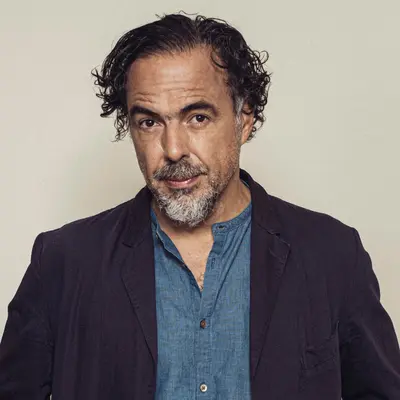
63 years old
Who Is Alejandro González Iñárritu?
Alejandro González Iñárritu is a Mexican filmmaker primarily known for making modern psychological drama films about the human condition. His projects have garnered critical acclaim and numerous accolades, including five Academy Awards, Special Achievement Awards, Golden Globe Awards, BAFTA Awards, and Directors Guild of America Awards.
Iñárritu significantly impacted world cinema and spearheaded the Mexican film renaissance in the early 21st century with movies featuring interconnected stories and nonlinear narratives. His work contributed to a distinctive national vision in cinema, challenging Hollywood’s dominance.
He is not just a filmmaker. He is a force of nature. He is, without question, one of the most daring directors working today.
Early Life: A Banker’s Son With a Restless Soul
Birth and Family Background
Alejandro González Iñárritu was born on August 15, 1963, in Mexico City, Mexico, to Hector González Gama and Luz Maria Iñárritu. Hector was a wealthy banker whose work allowed the family to live in Mexico City’s affluent Las Aguilas neighborhood.
Growing up in one of the world’s largest cities shaped him deeply. Mexico City was chaotic. It was colorful. It was full of contradictions. All of those qualities would later find their way onto his screens.
The Young Wanderer: Crossing Oceans at Seventeen
Iñárritu was never content to stay still. At the ages of seventeen and nineteen, he crossed the Atlantic Ocean on a cargo ship, working his way across Europe and Africa.
He himself has noted that these early travels as a young man have had a great influence on him as a filmmaker. The settings of his films have often been in the places he visited during this period.
Therefore, his cinema is not merely imagined. It is lived. It is felt. It is remembered.
Education: Universidad Iberoamericana
After his travels, González Iñárritu returned to Mexico City and majored in communications at Universidad Iberoamericana. It was there that his storytelling instincts found formal structure. However, the real education happened outside the classroom — on cargo ships, in foreign cities, and eventually, behind a radio microphone.
Before Film: A Career in Radio and Music
Mexico’s Number One Radio Station
Few people know that Iñárritu was a celebrated radio personality before he ever stepped behind a film camera.
In 1984, he started his career as a radio host at the Mexican radio station WFM, a rock and eclectic music station. In 1988, he became the director of the station. Over the next five years, González Iñárritu spent his time interviewing rock stars, transmitting live concerts, and making WFM the number one radio station in Mexico.
This period taught him something vital. It taught him the power of sound. It taught him rhythm. Most importantly, it taught him how to hold an audience.
Composing for Film (1987–1989)
From 1987 to 1989, he composed music for six Mexican feature films. He has stated that he believes music has had a bigger influence on him as an artist than film itself.
Furthermore, from 1988 to 1990, González Iñárritu concentrated on his first love — music — and wrote the scores for six Mexican films. During this time, he became acquainted with Mexican novelist and screenwriter Guillermo Arriaga, and the two began a long and fruitful collaboration.
Career: A Filmmaker Who Changed Everything
Amores Perros (2000): A Debut That Shook the World
Iñárritu and Arriaga transformed one of their early ideas — about three interconnected stories set in a grim yet realistic Mexico City — into the screenplay for González Iñárritu’s feature directorial debut, Amores Perros (2000).
The movie was an international success. It won awards at the Cannes and Chicago film festivals, garnered 10 Mexican Ariel Awards, and earned an Oscar nomination for best foreign-language film.
Additionally, González Iñárritu is the first Mexican director to be nominated for the Academy Award for Best Director and by the Directors Guild of America for Best Director. Amores Perros was the film that announced his arrival to the world.
21 Grams (2003): Hollywood Beckons
After Amores Perros, Iñárritu crossed into Hollywood. 21 Grams (2003) starred Sean Penn, Naomi Watts, and Benicio del Toro. It continued his fascination with fractured timelines and human grief. The film earned strong critical acclaim and multiple award nominations, further establishing his singular voice in world cinema.
Babel (2006): Best Director at Cannes
Iñárritu continued to explore complex narratives with Babel, which won a Golden Globe for Best Drama.
He is also the first Mexican-born director to have won the Prix de la mise en scène (Best Director Award) at Cannes (2006).
Babel garnered seven Oscar nominations and won the Best Director Award at the 2006 Festival de Cannes. This global, four-story tapestry confirmed Iñárritu as one of the most ambitious narrative storytellers in contemporary cinema.
Biutiful (2010): A Solo Voice
Biutiful (2010) marked a departure. Iñárritu left the multi-narrative structure behind. He focused on a single protagonist — played by Javier Bardem — facing mortality in Barcelona. Biutiful was presented in Competition at Cannes in 2010. It earned Bardem the Best Actor prize at Cannes and an Oscar nomination.
Birdman (2014): The Grand Slam
2014 was the year Alejandro González Iñárritu conquered Hollywood completely.
Iñárritu took home the prize for Best Director, Best Picture, and Best Original Screenplay at the 87th Academy Awards for Birdman or (The Unexpected Virtue of Ignorance).
The film — a blistering, technically revolutionary portrait of a faded superhero actor trying to reclaim his artistic legacy — appeared to be shot in a single continuous take. It starred Michael Keaton, Edward Norton, Emma Stone, and Naomi Watts. It was bold. It was daring. It was unlike anything Hollywood had seen before.
The Revenant (2015): Back-to-Back History
Then came the impossible — he did it again.
The following year, he was awarded Best Director for The Revenant (2015), making him the third director to win back-to-back after John Ford and Joseph L. Mankiewicz.
Digger is Iñárritu’s first English-language movie since The Revenant. The Revenant starred Leonardo DiCaprio, who finally won his first Academy Award for Best Actor for this film. Shot in extreme conditions across Canada and Argentina, the film was a brutal, breathtaking survival epic. Cinematographer Emmanuel Lubezki — Iñárritu’s longtime collaborator — won his third consecutive Oscar for his extraordinary natural-light cinematography.
Carne y Arena (2017): Art Beyond Cinema
Iñárritu has never been limited by the screen.
In 2017, Iñárritu debuted a virtual-reality project, Carne y Arena, about the experience of migrants, which earned him an Academy Award for Special Achievement.
The VR show allowed people to put themselves in migrants’ shoes and “addressed the question with great strength and humanity.” It was a profound artistic statement. It showed that his vision extended far beyond storytelling — into empathy itself.
Bardo, False Chronicle of a Handful of Truths (2022)
Bardo was chosen to represent Mexico in the Best International Feature Oscar race — an honor twice bestowed by that country on a del Toro film and once on a Cuarón film.
A semi-autobiographical epic, Bardo is Iñárritu’s most personal film yet. It explores identity, memory, death, and Mexican history through the eyes of a journalist living abroad. The film received the Silver Lion for Best Direction at the 79th Venice Film Festival.
Digger (2026): The Next Chapter
In February 2024, it was announced that Alejandro G. Iñárritu would be directing his first English-language film since The Revenant (2015).
Digger is described as “a comedy of catastrophic proportions.” Tom Cruise stars as Digger Rockwell — “the most powerful man in the world,” a billionaire whose company may have set off an ecological disaster that could spark a nuclear war.
The film’s ensemble cast also includes Sandra Hüller, Jesse Plemons, John Goodman, Riz Ahmed, and Michael Stuhlbarg. Cinematographer Emmanuel Lubezki returns as Iñárritu’s collaborator. The film was shot in the UK over six months.
It is produced by Legendary Pictures and distributed by Warner Bros. Pictures, with a release date of October 2, 2026, and a budget of $125 million.
The partnership between Cruise and Iñárritu has been 25 years in the making. Cruise had seen Iñárritu’s directorial debut Amores Perros in its initial release, and the pair had been discussing projects since 2019 when Cruise was filming Top Gun: Maverick.
The Three Amigos: Mexico’s Greatest Cinematic Brotherhood
Iñárritu and Mexican filmmakers Alfonso Cuarón and Guillermo del Toro are known in the film industry as “The Three Amigos.”
Together, this trio has dominated Hollywood’s most prestigious awards for over two decades. He is one of the “Three Amigos” of Mexican filmmakers who have dominated the Academy Awards alongside Alfonso Cuarón — Best Director winner for Roma — and Guillermo del Toro — Best Director winner for The Shape of Water.
Their friendship is deep. Their influence is immeasurable. Their legacy is permanent.
Milestones and Records: A Career of Historic Firsts
Iñárritu has not just made great films. He has also broken barriers that had stood for generations. His record of historic firsts is unmatched among Latin American filmmakers:
- First Mexican filmmaker to be nominated for either director or producer in the history of the Academy Awards
- First to win an Academy Award for Best Original Screenplay and for Best Picture
- First to receive the Best Director Award at Cannes
- First to win a DGA Award for Outstanding Directing — and first to win consecutive DGA Awards
- First Latin American to serve as President of the Jury for the 72nd Cannes Film Festival, in 2019
- Third director in history to win back-to-back Best Director Oscars, after John Ford and Joseph L. Mankiewicz
Directing Style: The Art of the Human Condition
Iñárritu is primarily known for making modern psychological drama films about the human condition.
His approach to storytelling is distinctive. He rejects linear timelines. He embraces moral ambiguity. He trusts audiences to put the pieces together themselves.
Iñárritu’s work often delves into themes of human nature, life, and death, showcasing his unique ability to connect diverse stories across cultures.
Moreover, he has stated that he believes music has had a bigger influence on him as an artist than film itself. This is evident in every frame. Sound design, musical texture, and silence are all as expressive as the visuals in his work.
His collaboration with cinematographer Emmanuel Lubezki — spanning Birdman, The Revenant, and now Digger — has produced some of the most visually stunning sequences in modern cinema.
Complete Filmography
| Year | Title | Awards Highlights |
|---|---|---|
| 2000 | Amores Perros | Cannes Critics Week Award; Oscar nomination (Best Foreign Film); 10 Ariel Awards |
| 2003 | 21 Grams | Multiple Oscar nominations |
| 2006 | Babel | Cannes Best Director; 7 Oscar nominations; Golden Globe Best Drama |
| 2010 | Biutiful | Cannes Best Actor (Bardem); Oscar nomination |
| 2014 | Birdman | Oscar wins: Best Picture, Best Director, Best Original Screenplay |
| 2015 | The Revenant | Oscar wins: Best Director, Best Cinematography, Best Actor (DiCaprio) |
| 2017 | Carne y Arena (VR) | Special Achievement Academy Award |
| 2022 | Bardo | Venice Silver Lion for Best Direction; Mexico’s Oscar entry |
| 2026 | Digger | Upcoming — Warner Bros. / Legendary Pictures, October 2, 2026 |
Awards and Honours
| Year | Award | For |
|---|---|---|
| 2006 | Cannes Best Director (Prix de la mise en scène) | Babel |
| 2015 | Academy Award — Best Director | Birdman |
| 2015 | Academy Award — Best Picture | Birdman |
| 2015 | Academy Award — Best Original Screenplay | Birdman |
| 2016 | Academy Award — Best Director | The Revenant |
| 2017 | Academy Award — Special Achievement | Carne y Arena (VR) |
| 2019 | Cannes Jury President | 72nd Cannes Film Festival |
| 2019 | Commandeur de l’Ordre des Arts et des Lettres | Government of France |
| 2019 | Honorary Doctorate | National Autonomous University of Mexico |
| 2022 | Venice Silver Lion — Best Direction | Bardo |
| 2025 | Academy Honorary Award (Governors Awards) | Career achievement |
Personal Life: The Man Behind the Lens
Alejandro González Iñárritu was born on August 15, 1963, in Mexico City. He is married to María Eladia Hagerman and has two children.
He keeps his family life largely private. However, his personal experiences — exile, identity, loss, fatherhood — deeply inform his films. Bardo is the most personal proof of this. It is a direct artistic reckoning with his own life as a Mexican filmmaker living abroad.
His honors include being made a Commandeur de l’Ordre des Arts et des Lettres by the government of France in 2019. He studied at Universidad Iberoamericana and has been active in the industry since 1984.