Paul Newman
Aquarius
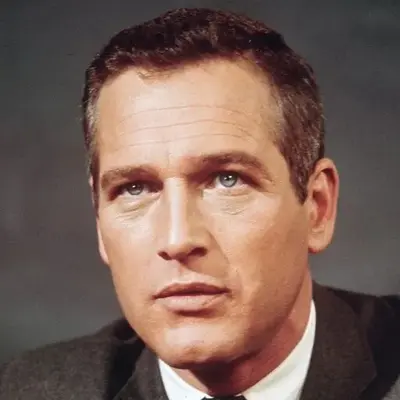
Who Was Paul Newman?
Paul Newman was a renowned American actor, director, and philanthropist, born in 1925 in Shaker Heights, Ohio. He was one of the greatest talents Hollywood has ever produced.
Paul Newman, the Oscar-winning actor with the legendary blue eyes, achieved superstar status by playing charismatic renegades, broken heroes, and winsome antiheroes in such revered films as The Hustler, Cool Hand Luke, Butch Cassidy and the Sundance Kid, The Verdict, The Color of Money, and Nobody’s Fool.
But he was far more than a movie star. Newman was also an oddity in Hollywood: the rare box-office titan who cared about the craft of acting, the sexy leading man known for the staying power of his marriage, and the humble celebrity who made philanthropy his calling card long before it was fashionable.
After battling lung cancer in his later years, Paul Newman passed away on September 26, 2008, at the age of 83.
Early Life: Cleveland, the Navy, and an Unlikely Path to Stardom
A Prosperous Ohio Childhood
Paul Leonard Newman was born on January 26, 1925, in Cleveland, Ohio. Newman grew up in Shaker Heights, Ohio, with his older brother Arthur and his parents, Arthur and Teresa. His father owned a sporting-goods store and his mother was a homemaker who loved the theatre.
He came from a diverse family background, with a Jewish paternal grandfather and a Catholic mother, which influenced his identity and worldview.
From a young age, the performing arts called to him. Newman was involved in theater from a young age, first appearing on stage at age seven, playing the court jester in a school production of Robin Hood.
World War II and the GI Bill
Newman served three years in the United States Navy during World War II as a radio operator. That experience gave him discipline. It gave him perspective. Furthermore, it shaped the steady, grounded character that would define both his personal and professional life.
He attended Kenyon College on the GI Bill after the war. It was there that he threw himself fully into acting — the pursuit that would ultimately change the course of his life.
Early Struggles and First Marriage
By 1950, the 25-year-old Newman had been kicked out of Ohio University for unruly behavior, served three years in the Navy, graduated from Kenyon College, married his first wife Jacqueline “Jackie” Witte, and had his first child, Scott. That same year, his father died.
When he became successful in later years, Newman said if he had any regrets, it would be that his father was not around to witness his success.
Yale Drama School and The Actors Studio
After briefly running his late father’s sporting goods store, Newman made a decisive choice. He walked away from the family business. He honed his acting skills at Kenyon College and later at The Actors Studio in New York City — the legendary training ground that shaped some of America’s greatest performing artists.
Acting Career: Five Decades of Unforgettable Performances
Broadway Debut and Early Television (1953–1955)
Newman’s career took off with a celebrated Broadway debut in Picnic (1953) and transitioned smoothly into film. He did not stop there. He moved easily among films, television, and Broadway productions, receiving acclaim in all venues. He played in The Desperate Hours (1955) on Broadway and starred in a 1955 television presentation of Thornton Wilder’s Our Town.
The Breakthrough: Somebody Up There Likes Me (1956)
Newman’s first film success was his portrayal of boxer Rocky Graziano in Somebody Up There Likes Me (1956). He received wide acclaim for the authentic realism of his performance.
The role announced a major new star. Hollywood took notice. Audiences fell under his spell. And Paul Newman’s ascent had officially begun.
The Iconic Years: Cat on a Hot Tin Roof to Cool Hand Luke (1958–1967)
Newman’s 1950s and 1960s output was extraordinary. He delivered one classic performance after another.
In 1957, Paul Newman filmed The Long, Hot Summer alongside Joanne Woodward. That film won Newman the Best Actor award at the Cannes Film Festival. He also starred opposite Elizabeth Taylor in 1958 in Cat on a Hot Tin Roof, a smash hit that earned him his first Academy Award nomination.
He continued to shine in The Hustler (1961), Hud (1963), and Cool Hand Luke (1967), establishing himself as one of Hollywood’s most accomplished actors.
Superstardom: Butch Cassidy and the Sundance Kid (1969)
Newman starred in Butch Cassidy and the Sundance Kid (1969), earning critical acclaim and a devoted fan base.
His on-screen chemistry with Robert Redford in this film is the stuff of Hollywood legend. The movie became a cultural phenomenon. It remains one of the most beloved Westerns in cinema history. Moreover, the film’s title directly inspired one of Newman’s greatest philanthropic ventures.
The Versatile 1970s
Through the 1970s, Newman had hits and misses — from popular films like The Sting (1973) and The Towering Inferno (1974) to cult classics like Slap Shot (1977).
He also explored directing during this period. He formed production companies to gain creative control over his projects, further solidifying his status in Hollywood.
The Oscar Win: The Color of Money (1986)
Paul Newman’s relationship with the Academy Award was one of cinema’s great ongoing stories. Having received six Academy Award nominations for Best Actor and one career achievement Oscar in 1985, Newman finally won an Academy Award for his performance in director Martin Scorsese’s The Color of Money (1986), the sequel to The Hustler.
He became more at ease with himself, and it was evident in The Verdict (1982), for which he received his sixth Best Actor Oscar nomination. His later work was consistently praised by critics as the finest of his career.
Late Career Masterworks
Newman’s talent never dimmed. His later films drew universal admiration.
His revered later films included Nobody’s Fool, The Verdict, and Road to Perdition. Each role demonstrated that age only deepened his craft. He remained one of American cinema’s most vital and watchable performers right until the end.
Racing Career: Speed, Trophies, and the Thrill of the Track
The Movie That Started It All
Paul Newman’s passion for racing grew out of his work on screen. Newman began racing cars in 1972, three years after completing the movie Winning, in which his character, Frank Capua, was a struggling race car driver who turned his career around by winning the Indianapolis 500.
Newman and co-star Robert Wagner attended the Bob Bondurant racing school to prepare for the movie. Newman performed many of the at-speed racing scenes himself without the aid of a stunt driver.
The movie set his course. Because of Winning, Paul Newman became a genuine racing driver — not just a man playing one.
A Racing Career Under a Pseudonym
His first professional event as a racer was in 1972 at Thompson International Speedway. He entered quietly under the name “P.L. Newman,” by which he continued to be known in the racing community.
His movie bosses were never happy with his racing. It is not easy to get insurance on a production with a star who spends his weekends racing. However, Newman refused to give it up. He loved speed. He loved the camaraderie of the paddock. Furthermore, he loved the anonymity the track gave him.
Championship Success: SCCA Titles and Le Mans
During his career, Newman won four Sports Car Club of America (SCCA) national championships.
He had a second-place finish at the 1979 24 Hours of Le Mans, driving a Porsche 935 with Dick Barbour and Rolf Stommelen. That result — competing against professional racing drivers as a Hollywood actor — was remarkable by any standard.
The Record Books: Oldest Winner at Daytona
At age 70, Newman became the oldest person ever to be part of a winning team at an official auto race when he won in his class at the 1995 24 Hours of Daytona.
Paul was entered into the Guinness Book of World Records for this achievement and was awarded his Rolex Daytona inscribed “Paul Newman Rolex Motorsports Man of the Year 1995.”
Newman/Haas Racing: Building a Dynasty
In collaboration with Carl Haas, Newman/Haas Racing was founded in 1984, with Newman and Carl Haas hiring Mario Andretti as their star racer.
Newman/Haas Racing competed in CART, Champ Car, and the IndyCar Series from 1983 to 2011. Over the subsequent two-and-a-half decades, the race team took home eight championships in CART, Champ Car, and IndyCar — a record Newman proudly wore in the form of bejeweled rings.
In 2009, Newman was posthumously inducted into the SCCA Hall of Fame.
Philanthropy: A Legacy Worth Over Half a Billion Dollars
Newman’s Own: Salad Dressing That Changed the World
Paul Newman and writer friend A.E. Hotchner started making salad dressing for friends, family, and colleagues in 1980. As news of how great it was spread, demand became so high they began selling it. In the first year, they cleared $920,000. They immediately decided that the profits should go to charity.
In 1982, after adding marinara sauce, they formed Newman’s Own, Inc. From the start, it was a for-profit corporation that donated 100% of its net earnings to charities.
To date, Paul Newman and Newman’s Own Foundation have given nearly $570 million to thousands of impactful organizations around the world.
The product range grew to include salad dressings, spaghetti sauce, lemonade, salsa, and popcorn. However, the mission never wavered. Every single dollar of profit went to those in need.
The Hole in the Wall Gang Camp (1988)
The Hole in the Wall Gang Camp was founded by Paul Newman in 1988 in northeastern Connecticut for children with serious medical conditions, including cancer, sickle cell disease, HIV/AIDS, and hemophilia.
The camp welcomes 1,000 kids, free of charge, from across the United States and abroad every summer. It is here that children with cancer or serious blood diseases find camaraderie, joy, and a renewed sense of childhood.
Newman named the camps after the gang to which he and co-star Robert Redford belonged in Butch Cassidy and the Sundance Kid. Today, the SeriousFun Children’s Network — inspired by that original camp — serves more than 20,000 seriously ill children and families every year.
The Scott Newman Center (1980)
Newman established the anti-drug Scott Newman Foundation to honor his son Scott, who died of an accidental drug overdose in 1978.
In his own words, Newman explained his motivation to give: “I wanted, I think, to acknowledge Luck: the chance of it, the benevolence of it in my life, and the brutality of it in the lives of others — made especially savage for children because they may not be allowed the good fortune of a lifetime to correct it.”
Those words say everything. They explain the man behind the movies and the philanthropy. They reveal a person who never forgot that luck was fragile — and that those with it owed something to those without it.
Personal Life: A Love Story for the Ages
Joanne Woodward: The Great Love
Newman met actress Joanne Woodward in 1953. Shortly after filming The Long, Hot Summer in 1957, he divorced Jackie Witte and married Joanne early in 1958.
They remained married for 50 years, until he died in 2008. They had three daughters: Elinor “Nell” Teresa (born 1959), Melissa “Lissy” Stewart (born 1961), and Claire “Clea” Olivia (born 1965).
When asked why he remained faithful in a town famous for its temptations, Newman gave one of Hollywood’s most memorable answers. “Why go out for a hamburger when you have steak at home?”
First Marriage and Children From His First Wife
Newman married his first wife Jacqueline “Jackie” Witte in 1950. They had a son, Scott, and two daughters. His son Scott’s tragic death in 1978 from an accidental drug overdose became one of the defining personal losses of Newman’s life — and a powerful catalyst for his philanthropy.
Awards and Accolades
Throughout his career, Newman received numerous accolades for his exceptional performances. He won the Academy Award for The Color of Money (1986). He also received an honorary Academy Award for his extraordinary body of work. Newman’s impact on the industry was further recognized with awards from BAFTA, the Berlin International Film Festival, and the National Society of Film Critics.
Newman received numerous honours, including the Jean Hersholt Humanitarian Award in 1993 — eight Oscar nominations for Best Actor, as well as recognition for his humanitarian efforts.
He won a BAFTA Award, a Screen Actors Guild Award, a Cannes Film Festival Award, and an Emmy Award among many others.
Filmography Highlights
| Year | Film | Notable Achievement |
|---|---|---|
| 1956 | Somebody Up There Likes Me | Breakthrough role |
| 1958 | Cat on a Hot Tin Roof | First Oscar nomination |
| 1958 | The Long, Hot Summer | Cannes Best Actor |
| 1961 | The Hustler | Oscar nomination |
| 1963 | Hud | Oscar nomination |
| 1967 | Cool Hand Luke | Oscar nomination |
| 1969 | Butch Cassidy and the Sundance Kid | Cultural landmark |
| 1973 | The Sting | Box office smash |
| 1977 | Slap Shot | Cult classic |
| 1982 | The Verdict | Oscar nomination |
| 1986 | The Color of Money | Academy Award Win |
| 1994 | Nobody’s Fool | Berlin International Film Festival Award |
| 2002 | Road to Perdition | Oscar nomination |