Warren Buffett
Who Is Warren Buffett?
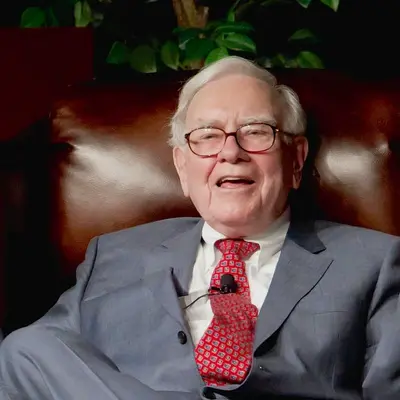
Warren Buffett, known as the “Oracle of Omaha,” is an American businessman and philanthropist widely regarded as one of the most successful investors in history.
His story is remarkable. It is also deeply human.
Warren Edward Buffett was born on August 30, 1930, in Omaha, Nebraska, the second of three children. His father, Howard Huff Buffett, was a stockbroker and later a four-term U.S. Congressman. His mother, Leila Stahl Buffett, managed the family household during a period of significant economic upheaval.
Berkshire Hathaway Inc. has been Warren Buffett’s primary investment vehicle since he took control of the company in 1965. Under his leadership, it grew from a struggling textile mill into one of the world’s most valuable companies.
Furthermore, as of May 2025, the company has a market cap of nearly $1.2 trillion. Buffett is personally worth nearly $170 billion and is the largest shareholder of Berkshire Hathaway.
Early Life: A Boy Who Always Knew He’d Be Rich
Growing Up During the Great Depression
Growing up during the tail end of the Great Depression shaped Buffett’s lifelong relationship with money. The economic hardship he witnessed in Omaha instilled a deep sense of frugality and an appreciation for financial security that would define both his investing style and his personal habits for decades to come.
His drive was evident early. He also showed an interest in money at a very early age and told one of his sisters that he was going to be a millionaire when he got older.
Years later, he reflected on that certainty. “I always knew I was going to be rich,” he once said. “I don’t think I ever doubted it for a minute.”
The Entrepreneur Who Started at Age Six
Warren Buffett displayed an early aptitude for business, purchasing Coca-Cola at age 6 to resell for a profit. This was not a coincidence. It was the beginning of a lifelong pattern of spotting value where others did not.
His entrepreneurial spirit showed through several newspaper routes, buying and leasing out a pinball machine, and selling soda. He identified that Coca-Cola was more popular than Pepsi by collecting and sorting used bottle caps at horse races and other big events.
First Stock Purchase at Age Eleven
He showed strong interest in mathematics and money-making activities during childhood. At the age of 11, he bought his first stock, showing early curiosity about investing.
From an early age, it was clear not only that Buffett was a gifted mathematician but also that he had an exceptional gift for business and financial markets. He began working for his father’s stockbroking firm at the age of eleven.
These were not the hobbies of an ordinary child. They were the early moves of a future legend.
Education: From Omaha to Columbia and a Life-Changing Mentor
University of Nebraska and Wharton
After graduating high school early, he attended the Wharton Business School and the University of Nebraska. However, the most defining chapter of his education was still ahead.
Benjamin Graham and Columbia University
He then studied under the influential investor Benjamin Graham at Columbia. Graham’s teachings shaped Buffett’s value investing philosophy of focusing on a company’s intrinsic value.
He worked a job under Graham as an analyst at Graham-Newman, an investment house in New York. This mentorship was transformative. Graham taught him to look past market noise. He taught him to see what a business was truly worth.
Therefore, when Buffett eventually built his own investment career, he had a foundation that was both intellectually rigorous and practically tested.
Career: From a Small Partnership to a Trillion-Dollar Empire
Buffett Partnership Ltd. (1956)
After graduating, Buffett worked briefly for Graham’s firm before returning to Omaha to launch his own partnership in 1956, which grew tremendously successful over the following decade.
He ran the partnership with extraordinary discipline. He beat the market consistently. His reputation grew quickly.
Taking Control of Berkshire Hathaway (1965)
Together with his partner Charlie Munger, Buffett bought Berkshire Hathaway, a New England textile business.
The move seemed counterintuitive at first. Berkshire was a struggling company in a dying industry. However, Buffett saw something others missed. He saw a vehicle for compounding capital over decades.
It took Munger to persuade Buffett to change his investment style from “cigar butt investing” — buying dying companies cheap and making a profit on liquidation value — to buying wonderful businesses at fair prices.
That shift changed everything.
The Investment Philosophy That Defined a Generation
Buffett’s approach to investing is deceptively simple. Buy great companies. Pay fair prices. Hold them for a very long time. Never panic.
He stood out for his long-term investment philosophy, often summarized by his preference for buying “wonderful companies at fair prices” and holding them indefinitely. That approach contrasted with the short-term focus of many institutional investors and influenced generations of portfolio managers and individual investors.
His biggest investments have included Coca-Cola, Apple, American Express, GEICO, and Bank of America — companies with powerful brands, durable competitive advantages, and strong cash flows.
Charlie Munger: The Partner Who Sharpened His Mind
No biography of Warren Buffett is complete without honouring Charlie Munger.
Munger served as Berkshire Hathaway’s Vice Chairman for decades. He was Buffett’s intellectual partner, trusted advisor, and closest friend. Together, they built one of the most studied capital allocation structures in business history.
Charlie Munger died in late 2023, marking the end of one of the greatest investing partnerships in history.
The $9.7 Billion OxyChem Acquisition (2025)
In October 2025, Buffett led the $9.7 billion acquisition of OxyChem, which was widely considered to be his last major acquisition as CEO.
It was a fitting final act. Even in retirement, Buffett never stopped looking for value.
Retirement: The End of a 60-Year Era
The Announcement That Stunned the World (May 2025)
Warren Buffett has spent the last 60 years of his storied career at the helm of Berkshire Hathaway. On Saturday, he announced his tenure as CEO was coming to a close. The 94-year-old investing legend announced this during the company’s annual shareholder meeting in Omaha, Nebraska.
“The time has arrived,” Buffett said. He confirmed that Greg Abel, long seen as his likely successor, is expected to assume the role of CEO. “It feels like the right moment for Greg to take over leadership of the company at the end of this year,” Buffett said.
Buffett announced with two cans of Coca-Cola in front of him and a surprised Abel beside him. The thousands in attendance gave Buffett a standing ovation. The event drew former Democratic presidential nominee Hillary Clinton, Apple CEO Tim Cook, and former Microsoft CEO Bill Gates.
Greg Abel: The Man Who Stepped Into Enormous Shoes
Greg Abel, the vice chairman of non-insurance operations of Berkshire, was designated as Buffett’s successor in 2021. Abel, 62, has been the group’s vice chairman since 2018, managing non-insurance operations.
Buffett will remain as chairman before turning that role over to his son, Howard Buffett, upon his death.
“I would still hang around and conceivably be useful in a few cases,” Buffett said — specifically when it comes to possibly making any large acquisitions.
The Official Last Day (December 31, 2025)
Warren Buffett officially stepped down on December 31, 2025, ending his storied career that spanned over 60 years.
Despite Buffett’s retirement, his work is not fully complete. He will remain chairman of Berkshire Hathaway and told shareholders in November that he will continue sharing his public thoughts in annual letters.
Philanthropy: Giving It All Away
The Giving Pledge (2010)
Warren Buffett is not just one of the world’s greatest investors. He is also one of its greatest givers.
He, along with Bill Gates and Melinda French Gates, co-founded the Giving Pledge in 2010, encouraging the world’s richest people to pledge at least half of their fortunes to charity. This initiative has had a profound impact on giving norms among the ultra-wealthy.
Buffett himself plans to donate more than 99% of his wealth — currently valued at around $150 billion — during his lifetime or upon his death.
Nearly $50 Billion to the Gates Foundation
For nearly two decades, Buffett had channeled his donations via the Gates Foundation — some $48 billion across 19 years.
In June 2025, about 9.43 million Class B Berkshire shares were given to the Bill & Melinda Gates Foundation Trust, along with donations to his children’s foundations — the Sherwood Foundation, the Howard G. Buffett Foundation, the NoVo Foundation, and the Susan Thompson Buffett Foundation.
A Major Philanthropic Pivot (2026)
However, in 2026, Buffett made a significant change to his giving strategy.
Buffett said in 2024 that he planned to cut off donations to the Gates Foundation after he died and let his three children decide how to distribute the rest of his fortune.
Buffett recently donated thousands of Berkshire shares worth nearly $6 billion to four foundations run by his children, marking a clear shift in the direction of his legacy philanthropy.
Buffett revealed that he recently broke his leg and underwent surgery for it, but said he is recovering well. He also said he wants his own Berkshire shares to be distributed by the end of 2034.
The Susan Thompson Buffett Foundation
One of the philanthropic causes closest to his heart is the foundation named after his late first wife. It focuses on reproductive health, education, and global development — causes that Susan Buffett championed deeply throughout her life.
Personal Life: Simple Living, Enormous Wealth
First Marriage: Susan Thompson Buffett
Buffett married his first wife, Susan, in 1954, and they had three children: Susie, Howard, and Peter. In 1977, Susan and Buffett separated, but they remained married until she died in 2004 and maintained an amicable relationship. It was Susan who introduced Buffett to Astrid Menks, who married Buffett in 2006.
Second Marriage: Astrid Menks
Buffett and Astrid Menks married in 2006, on his 76th birthday. Their relationship had been ongoing since the late 1970s, with Susan Buffett’s knowledge and blessing. It is a deeply unconventional story — one that reflects the uniquely complex but loving nature of Warren Buffett’s personal life.
The House He Has Lived in Since 1958
Buffett’s frugality contrasts sharply with his immense wealth. He continues to live in the home he purchased in 1958 for $31,500.
This one fact tells you everything about the man. He is worth over $100 billion. Moreover, he still lives in the same modest house in Omaha, Nebraska, that he bought nearly 70 years ago.
Children and Legacy
Buffett has three children. Each runs their own charitable foundation.
Susie Buffett leads the Sherwood Foundation, focused on education and social justice in Nebraska. Howard Buffett runs the Howard G. Buffett Foundation, focused on food security and conflict resolution. Peter Buffett co-founded the NoVo Foundation, focused on empowering women and girls globally.
Buffett surprised the philanthropic world by announcing that nearly all of his remaining wealth after he dies will go to a new charitable trust overseen by his three children.
Investment Legacy: A Record That May Never Be Matched
Warren Buffett’s investment record is extraordinary. It is almost statistically impossible to replicate.
Berkshire Hathaway’s Class A shares traded at around $18 in 1965. By the end of 2025, they closed at $754,800 — up almost 10.9% for 2025 alone.
Over six decades, Berkshire generated compounded annual returns that dramatically outpaced the S&P 500. His core holdings — Apple, Coca-Cola, American Express, Bank of America — reflect his unwavering belief in brand strength, pricing power, and management quality.
Buffett’s legacy extended beyond financial performance. He helped popularize the idea that extreme wealth carries a moral obligation to benefit society — a view he embodied through his philanthropy and the Giving Pledge.
Famous Warren Buffett Quotes
“Price is what you pay. Value is what you get.”
“Rule No. 1: Never lose money. Rule No. 2: Never forget Rule No. 1.”
“Be fearful when others are greedy, and greedy when others are fearful.”
“It’s far better to buy a wonderful company at a fair price than a fair company at a wonderful price.”
“Someone’s sitting in the shade today because someone planted a tree a long time ago.”