Gloria Anzaldua
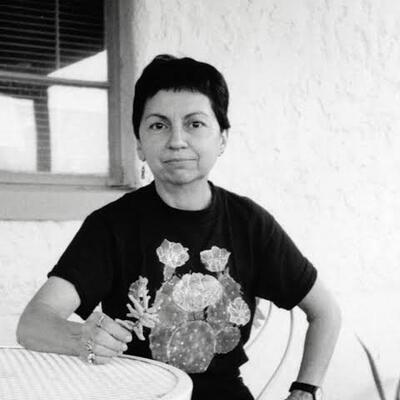
Libra
Who was Gloria Anzaldúa?
Gloria Evangelina Anzaldúa (September 26, 1942 – May 15, 2004) was a Chicana scholar, poet, cultural theorist, and queer feminist philosopher from the Rio Grande Valley of South Texas. She described herself as a “Chicana, Tejana, working-class, dyke-feminist poet, writer-theorist.”
Her 1987 book Borderlands/La Frontera: The New Mestiza placed her at the center of Chicana literary and academic life. Library Journal named it one of the 38 best books of 1987. Both the Hungry Mind Review and the Utne Reader listed it among the 100 best books of the twentieth century.
An internationally acclaimed independent scholar, cultural theorist, creative writer, and social-justice activist, Anzaldúa made lasting contributions to Chicanx studies, composition studies, feminism and feminist theory, literary studies, queer theory, and women’s and gender studies. Her writings have been included in over 100 anthologies.
She died in Santa Cruz, California, on May 15, 2004, from complications related to diabetes. The University of California, Santa Cruz, awarded her a Ph.D. in Literature posthumously in 2005.
Early Life: Sharecroppers, Migrant Fields, and a Valedictorian
Jesús María Ranch, Rio Grande Valley
Anzaldúa was born in Jesús María Ranch in the Rio Grande Valley of South Texas as the oldest of four siblings. Her parents, Urbano Anzaldúa and Amalia Anzaldúa García, moved their family to various ranches, working as migrant farmers throughout her childhood.
The surname Anzaldúa is of Basque origin. Her family was descended from Spanish settlers who arrived in the Americas in the sixteenth and seventeenth centuries, though Anzaldúa also claimed Indigenous ancestry — a position that drew criticism from some Indigenous scholars, which she disputed by pointing to what she called misreadings of her work.
Poverty, Race, and Family Shame
Gloria’s family was ashamed of her “Cara India” — her Indian-featured face — and dark skin. Her family had fallen quite far from their original status as deeded landholders during the Spanish Empire.
The family moved to Hargill, Texas, when she was 11, so Gloria could attend school. Despite being the only Chicana in advanced high school classes, she graduated as valedictorian of her high school in 1962. She was punished in grade school for her inability to speak English “properly” — a formative injustice that would surface decades later in the linguistic theory of Borderlands.
Education: From Texas Classrooms to a Posthumous Doctorate
From 1963 to 1964, Anzaldúa attended Texas Women’s University in Denton, Texas. She returned home a year later due to financial difficulties. From 1965 to 1968, she attended Pan American University — now the University of Texas Rio Grande Valley — where she majored in English, Art, and Secondary Education.
She earned her B.A. in 1968 and an M.A. in English and Education in 1972 from the University of Texas at Austin. While in Austin, she joined politically active cultural poets and radical dramatists, including Ricardo Sanchez and Hedwig Gorski.
While at UT-Austin, Anzaldúa taught a course called “La Mujer Chicana.” She later described it as a turning point that connected her to the queer community, writing, and feminism.
She returned to UT Austin in 1974 to pursue a PhD in Literature. She never completed it there. At the time of her death, she was a doctoral candidate at the University of California, Santa Cruz, which posthumously awarded her a Ph.D. in literature in 2005. Her papers are archived at the Nettie Lee Benson Latin American Collection at UT Austin.
Career Highlights
Teacher of Migrant Workers and Preschool Children (1969–1977)
After earning her B.A., Anzaldúa became a preschool teacher while also teaching migrant workers, before earning her master’s in 1973 from the University of Texas at Austin.
She noticed that there weren’t many books written for or about Chicana women. That absence drove her to begin writing.
Moving to California and the Feminist Awakening (1977)
In 1977, Anzaldúa moved to California, where she supported herself through her writing, lectures, and occasional teaching at San Francisco State University, the University of California, Santa Cruz, and other universities.
She began her college teaching career in 1979, lecturing at San Francisco State University for a year before teaching creative writing at the University of California, Santa Cruz, during the early 1980s, and at Norwich University in Vermont.
One of the first openly lesbian Chicana writers, Anzaldúa played a major role in redefining lesbian and Chicano/a identities.
This Bridge Called My Back (1981)
Anzaldúa co-edited This Bridge Called My Back: Writings by Radical Women of Color with Cherríe Moraga in 1981. The anthology exposed the white, American homogeneity of late twentieth-century feminism and changed what feminist scholarship could say and who it included.
It won the Before Columbus Foundation American Book Award. As a MacDowell Fellow in 1982, Anzaldúa edited the second edition of This Bridge Called My Back with Cherríe Moraga.
Civil rights theorist and professor Angela Y. Davis called the collection of published interviews with Anzaldúa (Interviews/Entrevistas, 2000) “impressive,” describing it as offering “a sustained look at Gloria Anzaldúa’s insistence on theorizing the personal and on infusing the political with the poetic.”
Borderlands/La Frontera: The New Mestiza (1987)
Published in 1987, Borderlands uses a unique blend of eight languages — two variations of English and six of Spanish — challenging the reader, as Anzaldúa herself was challenged during a childhood where she learned Spanish at home and was punished for speaking anything but English.
Her best-known book, Borderlands/La Frontera: The New Mestiza, is loosely based on Anzaldúa’s life growing up on the Mexican-Texas border. The book weaves poetry, history, songs, and testimonio-like narratives into a hybrid form that opens discussions about sexuality, linguistic diversity, and violence against LGBTQ people.
Library Journal named it one of the 38 best books of 1987. The Hungry Mind Review and the Utne Reader both listed it among the 100 best books of the century.
In 2010, the Unified School System in Arizona banned Borderlands/La Frontera by enforcing House Bill 2281, which prohibited the teaching of ethnic studies in a public school system. The ban became a flashpoint in debates about educational censorship and Chicana representation in public curricula.
Making Face, Making Soul and the 1990s (1990–2002)
Anzaldúa edited Making Face, Making Soul/Haciendo Caras: Creative and Critical Perspectives by Women of Color in 1990. The anthology brought together Chicana, Black, Asian American, and Indigenous feminist voices under a single editorial framework — an act that extended the coalition-building begun in This Bridge.
This Bridge We Call Home: Radical Visions for Transformation followed in 2002, co-edited with AnaLouise Keating.
Beyond Theory: Children’s Books and Bilingual Storytelling
Anzaldúa’s creative work extended well beyond academic theory. She wrote three bilingual children’s books featuring a recurring protagonist named Prietita — Spanish for “little dark-skinned girl” — widely understood as a self-portrait of Anzaldúa as a child.
Prietita Has a Friend (1991), Friends from the Other Side/Amigos del Otro Lado (1993), and Prietita and the Ghost Woman/Prietita y la llorona (1996) were illustrated by Consuelo Mendez.
Her reimagining of the Llorona tale in Prietita and the Ghost Woman weaves the cautionary folk narrative into an affirming encounter, giving the legend a compassionate reinterpretation.
These books filled a documented gap in literature for children of Mexican and Latinx origin — a gap Anzaldúa first identified while teaching at the University of Texas at Austin in the 1970s.
Posthumous Work: Light in the Dark (2015)
Light in the Dark/Luz en lo Oscuro: Rewriting Identity, Spirituality, Reality, edited by AnaLouise Keating, was published posthumously by Duke University Press in 2015. The manuscript, which Anzaldúa had been developing at the time of her death, extended her theories of Nepantla, spiritual activism, and what she called “conocimiento” — a Spanish-language framework for transformative consciousness.
Key Concepts: Borderlands, Nepantla, and the New Mestiza
Anzaldúa developed a set of theoretical concepts that now anchor scholarship across multiple disciplines.
- Borderlands / La Frontera — the physical and psychological space between cultures, languages, and identities, drawn from her life on the Texas-Mexico border.
- The New Mestiza — a hybrid consciousness that embraces contradiction rather than resolving it; an identity formed by living in multiple cultural worlds simultaneously.
- Nepantla — a Nahuatl word meaning “in the middle,” used by Anzaldúa to describe the disorienting in-between state of transformation. She coined the concept of “Nepantleras” to describe individuals navigating conflicting worlds.
- El Mundo Zurdo — “The Left-Handed World,” a visionary space of solidarity among women of color, queers, and the marginalized, conceived as a site of resistance and collective power.
- Conocimiento — a seven-stage model of transformative knowing, developed in her later work and published in This Bridge We Call Home (2002) and Light in the Dark (2015).
Personal Life
Gloria Anzaldúa identified publicly and consistently as a Chicana, Tejana, lesbian feminist. She described herself in her own words as a “dyke-feminist poet, writer-theorist” — a formulation that refused to subordinate any part of her identity to the others.
She was of small stature due to a childhood condition — a detail she addressed in interviews when discussing the body and its relationship to social power. She never married and left no children.
She spent her final years as a doctoral candidate at the University of California, Santa Cruz. She died on May 15, 2004, in Santa Cruz, California, from complications related to diabetes. Her family buried her in Hargill, Texas.
Awards and Recognition
Her awards include the Before Columbus Foundation American Book Award (for This Bridge Called My Back), the Lambda Lesbian Small Book Press Award (1991), the Lesbian Rights Award (1991), the Sappho Award of Distinction (1992), a National Endowment for the Arts Fiction Award (1991), and the Bode-Pearson Prize — American Studies Association Lifetime Achievement Award (2001).
In 2005, she posthumously received the National Association for Chicano Studies Scholar Award. In 2012, Equality Forum named her one of 31 Icons of LGBT History Month.
The National Women’s Studies Association awards the Gloria E. Anzaldúa Book Prize annually in her honor. The Gloria E. Anzaldúa Prize is also awarded annually.
Every 18 months, scholars gather to discuss Anzaldúa’s work at a conference hosted by the Society for the Study of Gloria Anzaldúa, founded in 2007.
Major Works
| Year | Title | Notes |
|---|---|---|
| 1981 | This Bridge Called My Back: Writings by Radical Women of Color | Co-edited with Cherríe Moraga; Before Columbus Foundation American Book Award |
| 1987 | Borderlands/La Frontera: The New Mestiza | Named one of 38 best books of 1987 by Library Journal; one of 100 best books of the century by Utne Reader and Hungry Mind Review |
| 1990 | Making Face, Making Soul/Haciendo Caras | Edited anthology of feminist women of color |
| 1991 | Prietita Has a Friend | Bilingual children’s book |
| 1993 | Friends from the Other Side/Amigos del Otro Lado | Bilingual children’s book |
| 1995–96 | Prietita and the Ghost Woman/Prietita y la llorona | Bilingual children’s book; retelling of La Llorona legend |
| 2000 | Interviews/Entrevistas | Collection of interviews; praised by Angela Y. Davis |
| 2002 | This Bridge We Call Home: Radical Visions for Transformation | Co-edited with AnaLouise Keating |
| 2009 | The Gloria Anzaldúa Reader | Posthumous; edited by AnaLouise Keating |
| 2015 | Light in the Dark/Luz en lo Oscuro | Posthumous; Duke University Press |