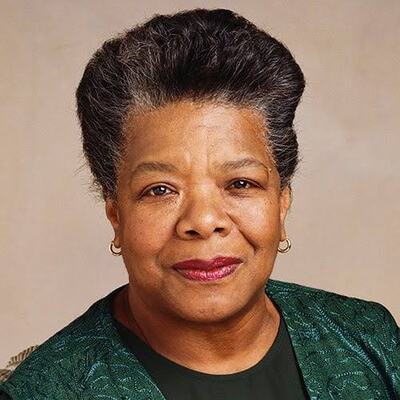
Samira Azzam
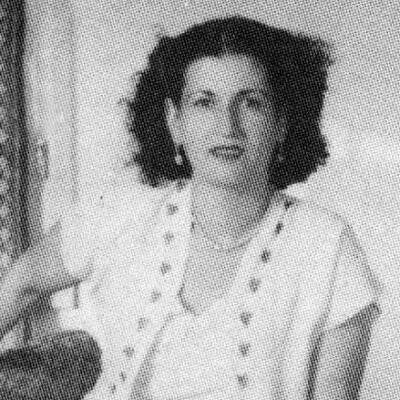
Who Was Samira Azzam?
Samira Azzam (13 September 1927 – 8 August 1967) was a Palestinian writer, broadcaster, and translator known for her collections of short stories. She was born in Acre, in Mandatory Palestine, to a Christian Orthodox family.
Samīra Azzām is the first Palestinian woman to achieve fame for her mastery of the short story form. She is known by scholars as the “Princess of the Arabic Short Story.”
Azzam, Jabra Ibrahim Jabra, and Ghassan Kanafani are widely considered to be the trifecta of modern Palestinian fiction writing. “There are three names there, and hers is the only woman’s name.”
She died at 39, on 8 August 1967, of a heart attack. Her body was taken to Beirut, where she was buried at the Protestant cemetery in Ras al-Nab’.
Early Life: Acre, Haifa, and a Classroom at 16
A Family in Acre
Samira Azzam was born in Acre on 13 September 1927 to a Christian Orthodox family. Her father was Qaisar Azzam and her mother was Olympe Buri. She had one brother, Suhail, and three sisters: Siham, Suhaila, and Abla.
She completed her elementary school education in Acre and her secondary school education at Takmilyet Al-Rahibat in Haifa.
Teacher at 16
Azzam began working as a schoolteacher in the Greek Orthodox school in Acre at 16, a post she held through 1945, when she began publishing in local newspapers under the alias “Coastal Girl.” The Arabic pen name was Fatat al-Sahel.
Azzam left her family after two years to become the headmistress of an all-girls school in Iraq.
Career: Radio, Exile, and the Written Word
The Near East Radio Station (1952–1956)
In 1952, she worked at the Sharq Al-Adna radio station in Cyprus as an apprentice broadcaster and writer for the programme “Women’s Corner.” When the station moved to Beirut in 1954, Azzam moved with it and took charge of the daily programme “With the Morning.”
In Beirut, she was the host of a popular morning show. She wrote for an Iraqi newspaper and published two collections of short stories in the 1950s: Little Things (1954) and The Big Shadow (1956), and began translating works from English to Arabic.
Baghdad: Marriage, Expulsion, and Return (1957–1959)
In 1957 she travelled to Baghdad, where she met Adib Yusuf al-Hisn, a Palestinian man from Nazareth, and married him. The Jadaliyya archive records the wedding date as 24 December 1959.
Azzam and her husband were expelled from Baghdad, accused by the regime of Abd Al-Karim Qasim of Nasserist sympathies, and they settled in Beirut in 1959.
Beirut: The Franklin Institution and Literary Journalism
After returning to Beirut, Azzam worked at the Franklin Institution for Translation and Publishing. During this period, she wrote for Sawt Al-Mar’a (Women’s Voice) and Dunia Al-Mar’a (Women’s World) magazines.
During her time in Baghdad, Azzam wrote in the Iraqi newspaper Al-Shaab, where Badr el-Shakir el-Sayyab was one of the editors.
Writing: Short Stories as Palestinian Memory
Why the Short Story?
Azzam’s work came to prominence in the 1950s, at a time when Palestinian fiction was still focused on the short story, which — since it could be published in broadsheets and read aloud on the radio — circulated far more widely than the novel.
Although Palestine was the star around which Samira Azzam revolved, only a few of her stories — seven — explicitly mention Palestine or Palestinians. Some found her work insufficiently political and even insufficiently Palestinian.
Themes and Craft
Major themes in her works included precision and control. Her stories often revolved around a specific action or choice. Throughout her first collection, characters struggle and, in many cases, fail in their endeavours, often because of external forces.
Through thirty-one stories in the collection Out of Time, the reader encounters resistance literature, the complexity of human experience, Palestinian identity, societal structures, class hierarchies, the role of women, and Palestinian narratives in the diaspora.
Although Azzam initially masked her political views in her writing, it became increasingly obvious that her stories were an allegory for Palestinian political struggles.
“Bread of Sacrifice”
“Bread of Sacrifice,” one of Azzam’s most notable stories, depicts the experiences of Palestinian fighters and civilians in Acre during the Nakba. The protagonist Su’ad decides to remain in Acre during the conflict to support the fighters, where she is tragically killed in an attempt to bring food to them. The story explores themes of love, sacrifice, and resistance.
Literary Legacy and Ghassan Kanafani
Samira Azzam was a Palestinian short story writer whose work influenced her more famous successor, Ghassan Kanafani. Both were from the city of Acre.
In a 2018 article on Palestinian short story, the critic Faisal Darraj wrote plainly: “Azzam has not yet received the accolades she deserves.”
Publications
Original Short Story Collections
- Ashya’ saghira (Small Things). Beirut: 1954
- al-Zill al-kabir (The Big Shadow). Beirut: 1956
- Qisas ukhra (Other Stories). Beirut: 1960
- al-Sa’a wa-l-insan (The Clock and the Man). Beirut: 1963
Two further collections were published posthumously:
- al-‘Id la ya’ti min al-nafidha al-gharbiya (The Holiday Doesn’t Come from the Western Window). Beirut: 1971
- Asda’ (Echoes). Beirut: 1997
Translations into Arabic
Azzam’s translations included:
- Pavilion of Women — Pearl Buck (1958)
- East Wind: West Wind — Pearl Buck (1958)
- American Short Stories — Ray West (1960)
- When We Lost Satisfaction — John Steinbeck (1962)
- Stories of Heroes — Alice Hazelton (1963)
She also translated Collected Short Stories by Somerset Maugham, Candida by Bernard Shaw, The Grapes of Wrath by John Steinbeck, and Dodsworth by Sinclair Lewis.
English Translation
A collection of her short stories, titled Out of Time: The Collected Stories of Samira Azzam, was published in Ranya Abdelrahman’s translation by ALQ Books in 2022.
Adaptations
The Clock and the Man was adapted as a short film, starring Mahmood Shalabi, Anat Hadeed, Samia Qazmooz Bakri, and Muhammad Bakri, directed by Ghazi Abu Bakr.
Career Timeline
| Year | Event |
|---|---|
| 1927 | Born in Acre, Mandatory Palestine |
| 1943–1945 | Taught at the Greek Orthodox School in Acre from age 16 |
| 1945 | Began publishing in local newspapers as Fatat al-Sahel |
| 1948 | Fled Palestine with her family during the Nakba |
| 1952 | Joined Near East Radio station in Cyprus as broadcaster, “Women’s Corner” |
| 1954 | Moved to Beirut when station relocated; hosted daily show “With the Morning” |
| 1954 | Published Small Things — debut short story collection |
| 1956 | Published The Big Shadow |
| 1957 | Moved to Baghdad; wrote for Al-Shaab newspaper |
| 1957 | Met Adib Yusuf al-Hisn in Baghdad |
| 1959 | Expelled from Baghdad by the Abd Al-Karim Qasim regime; returned to Beirut |
| 1959 | Married Adib Yusuf al-Hisn on 24 December |
| 1960 | Published Other Stories |
| 1963 | Published The Clock and the Man — won joint literary award |
| 1967 | Died of a heart attack on 8 August, aged 39 |
| 1971 | The Holiday Doesn’t Come from the Western Window published posthumously |
| 1997 | Echoes published posthumously |
| 2022 | Out of Time — 31 stories in English translation by Ranya Abdelrahman, ALQ Books |