Emi Hasegawa
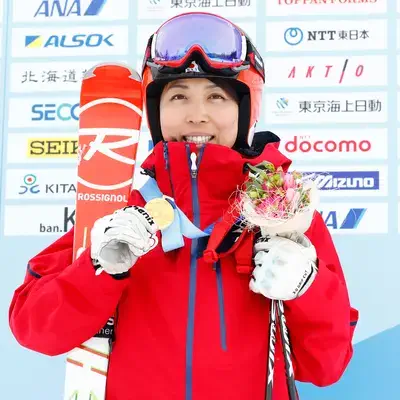
40 years old
Who Is Emi Hasegawa?
Emi Hasegawa is a professional Japanese alpine ski racer. She was born on May 8, 1986, in Katsushika, Japan. Her full name in Japanese is 長谷川絵美, romanized as Hasegawa Emi.
She is one of the most accomplished Japanese women in alpine skiing. Her career spans two FIS Alpine World Ski Championships and a landmark double gold medal performance at the 2017 Asian Winter Games. She made her FIS World Cup debut as early as December 2008. Since then, she has consistently represented Japan at the highest level of the sport.
Moreover, Hasegawa is part of a proud tradition of Japanese female alpine skiers. She has competed across multiple disciplines. She has faced disqualifications, climbed back, and delivered some of Japan’s finest moments on snow. Her story is one of perseverance, national pride, and athletic excellence.
Early Life: Born in Katsushika, Tokyo
Roots and Background
Emi Hasegawa was born in Katsushika, a special ward located in the northeastern part of Tokyo, Japan. She holds Japanese nationality. She competes and communicates in the Japanese language.
Katsushika is known for its rich cultural heritage and strong community spirit. Growing up in this part of Tokyo, Hasegawa developed the discipline and focus that would later define her athletic career.
She belongs to the Hasegawa family, a prominent family surname in Japan. Her family name comes first in Japanese naming convention, making her formal name Hasegawa Emi in Japan.
Career Journey: From World Cup Debut to Double Gold Glory
Making Her World Cup Debut (December 2008)
Emi Hasegawa made her FIS World Cup debut on December 15, 2008, in Levi, Finland. Levi is a famous venue on the alpine skiing calendar, known for hosting prestigious women’s slalom events each season.
This debut was a significant milestone. It placed her among the elite women in world alpine skiing. It also gave her exposure to the top level of international competition at a relatively early stage of her senior career.
From that moment, Hasegawa committed fully to competing on the world stage. She trained hard, raced consistently, and represented Japan with pride across Europe and beyond.
The 2011 FIS Alpine World Ski Championships, Garmisch-Partenkirchen, Germany
Emi Hasegawa competed at the 2011 FIS Alpine World Ski Championships, held in Garmisch-Partenkirchen, Germany. She entered two events: the slalom and the giant slalom.
In the slalom, she was unfortunately disqualified during the first run. Disqualifications are not uncommon in alpine skiing a missed gate can end a race in an instant. Despite this setback, Hasegawa did not let it define her championship.
In the giant slalom, she responded with resilience. She finished in 41st place out of the world’s best competitors. This result demonstrated her ability to perform at world championship level and strengthened her resolve going forward.
Continued FIS World Cup Campaigns (2012–2014)
After the 2011 championships, Hasegawa continued her World Cup campaigns across Europe. Her FIS results record from this period reflects a dedicated competitor who regularly entered slalom and giant slalom events in Switzerland, Austria, Finland, and beyond.
Therefore, between her two World Championship appearances, she stayed active and competitive. She built her technical skills, refined her race strategies, and kept earning points on the international circuit.
The 2015 FIS Alpine World Ski Championships Beaver Creek, USA
Hasegawa earned selection for her second FIS Alpine World Ski Championships, held in Beaver Creek, Colorado, USA, in 2015. She entered the giant slalom event.
Furthermore, this time she delivered a stronger result. She finished in 28th place in the giant slalom. This was a significant improvement from her 2011 championship showing. It confirmed that her years of training and World Cup experience were paying off.
Beaver Creek is one of the most demanding alpine venues in North America. Competing at two world championships across four years placed Hasegawa firmly among Japan’s elite alpine ski racers.
The 2017 Asian Winter Games Sapporo, Japan: Double Gold Glory
The greatest moment of Emi Hasegawa’s competitive career arrived at the 2017 Asian Winter Games, held in Sapporo, Japan, from February 19 to 26, 2017.
Hasegawa was on home soil. She was competing in front of a Japanese crowd. She was representing her nation at one of Asia’s biggest winter sporting events. The stakes could not have been higher.
Giant Slalom Gold
First, she competed in the Women’s Giant Slalom at Sapporo Teine on February 23. She delivered an outstanding performance. She claimed the Gold Medal, adding to Japan’s dominant display at the home games.
Slalom Gold: A Champion Returns
Then came the defining moment of her career. On Day 8 of the 2017 Asian Winter Games, on February 25, Emi Hasegawa made light of the challenging conditions to win the Women’s Slalom competition. Her total time was 1:42.20.
This slalom gold was her second gold medal of the Asian Winter Games. The podium on that day featured:
- 🥇 Emi Hasegawa (Japan) Gold
- 🥈 Asa Ando (Japan) Silver
- 🥉 Young-Seo Kang (South Korea) Bronze
It was a powerful moment for Japanese alpine skiing. It was a defining moment for Emi Hasegawa. She had not just competed; she had dominated.
Japan’s Emi Hasegawa made light of the challenging conditions to win the women’s slalom competition, securing her second gold medal of the Asian Winter Games in the process.
FIS World Cup Appearances (2017–2018)
After her Asian Winter Games triumph, Hasegawa returned to the FIS World Cup circuit. She competed in slalom and giant slalom events across the 2017–18 season.
Her World Cup appearances during this period included:
- October 28, 2017 Women’s Giant Slalom, Sölden, Austria
- November 11, 2017 Women’s Slalom, Levi, Finland
- January 3, 2018 Women’s Slalom, Zagreb, Croatia
- January 7, 2018 Women’s Slalom, Kranjska Gora, Slovenia
- January 9, 2018 Women’s Slalom, Flachau, Austria
- January 23, 2018 Women’s Giant Slalom, Kronplatz, Italy
- January 28, 2018 Women’s Slalom, Lenzerheide, Switzerland
Additionally, she competed in the PyeongChang 2018 Olympic Test Event and the Alpine FEC & President Cup 2017 Slalom. In that event, she finished in first place, ahead of Emiko Kiyosawa of Japan in second and Ekaterina Tkachenko of Russia in third. This was a tremendously encouraging result ahead of an Olympic year.
Career Results Summary
FIS Alpine World Ski Championships
| Year | Host City | Event | Result |
|---|---|---|---|
| 2011 | Garmisch-Partenkirchen, Germany | Slalom | DSQ (Run 1) |
| 2011 | Garmisch-Partenkirchen, Germany | Giant Slalom | 41st |
| 2015 | Beaver Creek, USA | Giant Slalom | 28th |
2017 Asian Winter Games, Sapporo, Japan
| Event | Result | Date |
|---|---|---|
| Women’s Giant Slalom | 🥇 Gold Medal | February 23, 2017 |
| Women’s Slalom | 🥇 Gold Medal (1:42.20) | February 25, 2017 |
Notable FIS World Cup Appearances
| Season | Event | Venue |
|---|---|---|
| 2008–09 | Slalom (Debut) | Levi, Finland |
| 2017–18 | Slalom / Giant Slalom | Multiple European venues |
| 2017 | Olympic Test Event Slalom | Pyeongchang, South Korea |
Personal Life: Identity and Background
Name and Heritage
Emi Hasegawa carries the family name Hasegawa, one of the most recognized surnames in Japan. In Hanja-derived Japanese writing, her full name is written as 長谷川絵美. In kana, it reads はせがわ えみ. She was born under the Taurus zodiac sign, known for its dedication and determination traits that clearly describe her athletic character.
Hasegawa is a native Japanese speaker. She represents Japan at every level of her competition. Her birthplace of Katsushika, Tokyo, gives her strong Tokyo roots.
A Private Competitor
Emi Hasegawa has kept her personal life largely private throughout her career. She allows her performances on the slopes to speak on her behalf. Details about her family, education, and personal relationships remain out of the public eye, a reflection of the quiet focus and professionalism she brings to every competition.


