Mary Hunter Austin
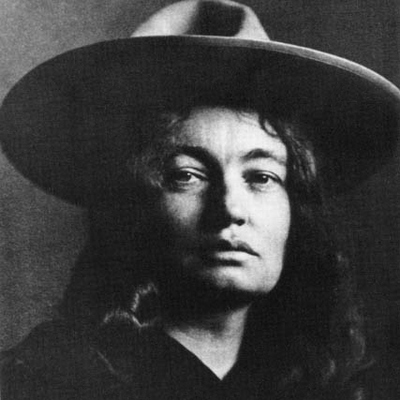
Virgo
Who Was Mary Hunter Austin?
Mary Hunter Austin was born on September 9, 1868, in Carlinville, Illinois, the fourth of six children of George and Susannah (Graham) Hunter. She died on August 13, 1934, in Santa Fe, New Mexico, at the age of 65.
She published 33 books across six decades. Her debut, The Land of Little Rain (1903), described the fauna, flora, and people of the region between the High Sierra and the Mojave Desert — and sold immediately. She spent 17 years studying Indigenous life in the Mojave Desert.
In 1929, she co-authored Taos Pueblo with photographer Ansel Adams; the book was printed in a limited edition of 108 copies and included Adams’s original photographic prints rather than reproductions. After her death, Mount Mary Austin in the Sierra Nevada was named in her honor, located 8.5 miles west of her former home in Independence, California.
Early Life: Carlinville, Illinois, to the San Joaquin Valley
Mary grew up in Carlinville, Illinois. Her father, George Hunter (1833–1878), a lawyer who shared her lively mind, died when she was ten. She completed her secondary education at the State Normal School in Bloomington before graduating from Blackburn College in 1888.
Her family moved to California that same year. They claimed land under the Homestead Act and established a farm in the San Joaquin Valley in Kern County. The years were lean. Mary worked as a schoolteacher while her brothers struggled to keep the homestead producing.
Marriage, Owens Valley, and the Desert That Made Her
Mary married Stafford Wallace Austin on May 18, 1891, in Bakersfield, California. He was a Hawaii-born graduate of the University of California, Berkeley, and a United States Land Commissioner.
The couple moved to the Owens Valley, east of the Sierra Nevada, where Wallace worked the land. Their only child, Ruth, was born on October 30, 1891, with a developmental disability that was never diagnosed. Ruth died young.
The Owens Valley became the landscape of The Land of Little Rain. Austin spent years walking its terrain and studying its Indigenous communities. She became fluent in the culture, daily rhythms, and spiritual life of the Mojave Desert’s Native peoples, and devoted 17 years to that study.
Mary and Wallace also became entangled in the California Water Wars — a series of political conflicts between Los Angeles and Owens Valley farmers over water rights. Los Angeles won. The valley’s water was drained to supply the city. Wallace moved to Death Valley.
Literary Career: From The Land of Little Rain to 33 Books
The Land of Little Rain (1903)
The Land of Little Rain was Austin’s first book and her most celebrated. Published in 1903, it described the landscape, flora, fauna, and people of the California desert between the High Sierra and the Mojave. It was a great and immediate success. A 1950 edition carried photographs by Ansel Adams.
The book opened with a line that set the terms of everything she would write: she named the terrain, named its creatures, and named the people living in it — without sentimentality and without distance.
Carmel and the Literary Circle (1906–1918)
In March 1906, Austin separated from Wallace and moved to Carmel-by-the-Sea, California, where a writers’ colony had formed around the bay. There, she was part of a social circle that included Jack London, Ambrose Bierce, and George Sterling and was one of the founders of the Forest Theater.
She wrote from a treehouse on the Carmel property. The books came steadily: The Basket Woman (1904), Isidro (1905), The Flock (1906), Lost Borders (1909), The Arrow Maker (1911), and A Woman of Genius (1912). She and Wallace divorced in 1914.
New York, Europe, and a Widening Scope (1911–1923)
Austin moved to New York around 1911. She traveled to Europe, where she met H.G. Wells and W.B. Yeats. She became close friends with Charlotte Perkins Gilman. During the New York years, she wrote The Ford (1917) and No. 26 Jayne Street (1920).
In 1923, she published The American Rhythm, a study of Native American poetry and its relationship to the land.
Santa Fe: The Final Chapter (1924–1934)
Austin visited Santa Fe in 1918. She helped establish the Santa Fe Little Theatre and directed its first production on February 14, 1919, at St. Francis Auditorium. In 1924, she settled in Santa Fe permanently after the School of American Research named her an associate in Native American Literature.
In 1929, she co-authored Taos Pueblo with Ansel Adams. The book was published in 1930 in a limited edition of 108 copies; each copy contained original photographic prints by Adams, not reproductions. Today, a copy sells for approximately $85,000.
Her autobiography, Earth Horizon, appeared in 1932. She published Experiences Facing Death in 1931 and Starry Adventure the same year. She also collaborated with artist Frank Applegate on the preservation of Spanish-Colonial arts in New Mexico.
Austin died in Santa Fe on August 13, 1934. She was cremated, and her ashes were placed in a crypt on Mount Picacho.
Advocacy: Water, Land, and Native Rights
Austin fought the City of Los Angeles in the Owens Valley water dispute from her years as a rancher’s wife in the 1890s. When Los Angeles won and the valley was drained, she wrote about the loss.
She spent 17 years conducting what she called a special study of Indigenous life in the Mojave Desert. The knowledge informed her fiction, her essays, her plays, and her poetry. She was a prolific novelist, poet, critic, and playwright, as well as an early feminist and defender of Native American and Spanish-American rights.
In Santa Fe, she worked alongside Mabel Dodge Luhan and other figures to preserve Pueblo culture and Spanish-Colonial crafts. She testified on behalf of Pueblo land rights before the United States Senate in 1922.
Key Works
| Year | Title | Form |
|---|---|---|
| 1903 | The Land of Little Rain | Nature essays |
| 1904 | The Basket Woman | Stories |
| 1905 | Isidro | Novel |
| 1906 | The Flock | Regional sketches |
| 1909 | Lost Borders | Stories |
| 1911 | The Arrow Maker | Play |
| 1912 | A Woman of Genius | Novel |
| 1917 | The Ford | Novel |
| 1920 | No. 26 Jayne Street | Novel |
| 1923 | The American Rhythm | Poetry/criticism |
| 1924 | The Land of Journeys’ Ending | Travel/nature |
| 1930 | Taos Pueblo (with Ansel Adams) | Photography/essay |
| 1932 | Earth Horizon | Autobiography |
Legacy
Austin’s papers are held at the Henry E. Huntington Library in San Marino, California (bulk dates 1920–1934). Her home in Independence, California, is a historical landmark. Mount Mary Austin in the Sierra Nevada carries her name. The Santa Fe Little Theatre she founded in 1918 still operates today as The Santa Fe Playhouse.
In 1989, Doris Baizley adapted The Land of Little Rain as a teleplay for American Playhouse; Helen Hunt starred in the production.