Marilyn Monroe
Who Was Marilyn Monroe?
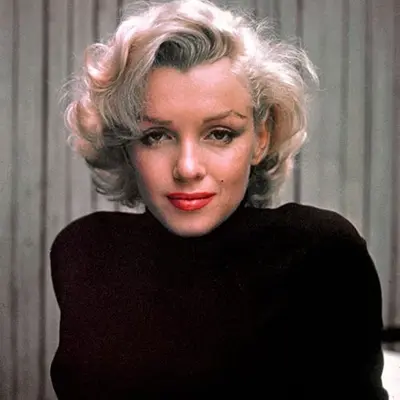
Marilyn Monroe was an American actress, comedienne, singer, and model. She became one of the world’s most enduring iconic figures. She is remembered for her winsome embodiment of the Hollywood sex symbol and her tragic personal and professional struggles within the film industry.
Her films grossed more than $200 million. She is known for her relationships with Arthur Miller, Joe DiMaggio, and possibly President John F. Kennedy.
The American Film Institute ranked her as the sixth-greatest female screen legend from the Golden Age of Hollywood. Decades after her death, her image remains the most recognizable in the world.
Early Life: A Childhood of Foster Homes and Broken Dreams
Born Into Uncertainty
Marilyn Monroe was born Norma Jeane Mortenson on June 1, 1926, in Los Angeles, California. Her mother, Gladys Pearl Baker, was a film cutter at Consolidated Film Industries.
Monroe never knew her father. However, a 2022 DNA test revealed that her biological father was Charles Stanley Gifford, her mother’s co-worker.
Her early years were difficult. They were unstable. They were marked by longing and uncertainty at every turn.
Foster Homes and an Orphanage
She lived in a foster home until age 7. For a couple of years, she then lived with her mother, who would park the girl at a movie theater for the day while she worked. After that, as Norma Jeane shuttled between foster homes and an orphanage, the cinema became her refuge.
Monroe spent most of her early childhood in foster homes and orphanages because her mother was committed to a mental institution. Furthermore, Monroe would maintain as an adult that one of her earliest memories was of her mother trying to smother her in her crib with a pillow.
Despite all of this, she survived. She persisted. She dreamed.
The Dream of Stardom
Monroe dreamt of becoming an actress like Jean Harlow and Lana Turner. The cinema was not just an escape. It was a destination. It was the place she was always heading toward — even as a little girl alone in the dark.
The Rise to Fame: From Munitions Worker to Hollywood Star
Discovered by a Camera
When her first husband was sent to the South Pacific, she began working in a munitions factory in Van Nuys, California. It was there that she was first discovered by a photographer.
Photographer David Conover saw her while taking pictures of women contributing to the war effort. He couldn’t believe his luck. She was a “photographer’s dream.” Conover used her for the shoot and then began sending modeling jobs her way.
That one moment changed everything. Therefore, what began on a factory floor became one of the most extraordinary careers in Hollywood history.
A New Name, a New Identity (1946)
By the time her first husband, Dougherty, returned in 1946, Monroe had a successful career as a model. That year, she signed her first movie contract. With the contract came a new name and image. She began calling herself “Marilyn Monroe” and dyed her hair blonde.
Norma Jeane Mortenson was gone. Marilyn Monroe was born.
Early Hollywood Roles (1950–1952)
Her early film appearances were minor. However, her performances in The Asphalt Jungle and All About Eve (both 1950) drew attention.
In 1950, following an uncredited role in The Asphalt Jungle, she attracted a flood of fan mail and an eye-catching appearance in All About Eve.
By 1952, she had her first leading role in Don’t Bother to Knock. Hollywood was beginning to take notice.
Career Highlights: The Films That Made a Legend
The Bombshell Years (1953–1955)
In 1953, Niagara brought her a lead role — a melodramatic film noir that dwelt on her seductiveness. Her “dumb blonde” persona was then used to comic effect in films such as Gentlemen Prefer Blondes (1953), How to Marry a Millionaire (1953), and The Seven Year Itch (1955).
These films made Marilyn Monroe a global name. Moreover, they created a screen persona that was both irresistible and, at times, limiting.
Breaking Free: The Actors Studio (1955)
Marilyn refused to be defined only by her looks. She demanded more from herself.
Limited by typecasting, Monroe studied at the Actors Studio to broaden her range. She took a hiatus from Hollywood and moved to New York City to study under Lee Strasberg at his Actors’ Studio.
This was not just a career move. It was an act of courage. It was a declaration that she was more than what Hollywood had decided she was.
Marilyn Monroe Productions (1955)
In 1955, Marilyn started her own motion picture company — Marilyn Monroe Productions. The company produced Bus Stop and The Prince and the Showgirl (co-starring Sir Laurence Olivier). These two films allowed her to demonstrate her talent and versatility as an actress.
Additionally, for The Prince and the Showgirl (1957), she received a BAFTA Award nomination and won a David di Donatello award.
The Masterpiece: Some Like It Hot (1959)
Marilyn received further recognition for 1959’s Some Like It Hot, winning a Golden Globe for Best Actress in a Comedy.
The New York Times proclaimed: “Hold on to your chairs, everybody, and get set for a rattling surprise. Marilyn Monroe has finally proved herself an actress.” It was one of the greatest comedic performances in cinema history — and the world finally acknowledged her full range.
The Final Film: The Misfits (1961)
Monroe’s last completed film was The Misfits (1961), co-starring Clark Gable, with a screenplay written by her then-husband, Arthur Miller.
The final years of Monroe’s life were marked by illness, personal problems, and a reputation for being unreliable and difficult to work with. However, behind those headlines was a woman in profound pain — not a difficult star.
Three Marriages: Love, Loss, and Headlines
James Dougherty (1942–1946)
Marilyn’s personal life started at the young age of 16 when she first married James Dougherty on August 5, 1942, in Brentwood, California. She divorced Dougherty on May 19, 1946.
Marilyn first married in 1942 to a boy named James Dougherty to avoid getting sent back to an orphanage. Even her first marriage began as a survival strategy. It reflects the vulnerability and resourcefulness that defined her entire life.
Joe DiMaggio (1954–1955): The Greatest Love Story
In 1954, Monroe experienced a whirlwind marriage to baseball legend Joe DiMaggio, which lasted a mere nine months. Their marriage was marked by intense passion but was ultimately short-lived, largely due to Monroe’s demanding career and public scrutiny.
Following Monroe’s divorce from Arthur Miller in 1961, DiMaggio reentered her life. When Monroe was hospitalized in February 1961 for a nervous breakdown, it was DiMaggio she called to help get her out.
When Monroe was found dead in 1962, it was DiMaggio who planned her funeral, bending to her casket to repeat “I love you, I love you.” He had fresh roses delivered to her grave twice a week for 20 years.
Their love story is one of the most enduring in American history — complicated, passionate, and ultimately unfinished.
Arthur Miller (1956–1961): The Intellectual Match
Monroe married playwright Arthur Miller on June 4, 1956. Monroe and Arthur shared a deep intellectual connection, but their marriage was marred by personal challenges, including Monroe’s struggles with mental health and fertility.
On their honeymoon in London, she found notes written by Miller that expressed doubts about their marriage, from which she never fully recovered.
During the filming of The Misfits, the screenplay Miller wrote for Monroe, the couple barely spoke to one another. They divorced on January 24, 1961, one week before the film opened.
Awards and Recognition
Marilyn Monroe’s career was marked by an extraordinary range of honors. From early publicity awards and audience-driven tributes in the 1950s, to major international recognition from the Golden Globes, BAFTA, and Italy’s David di Donatello, Monroe’s impact extended far beyond box office success.
Monroe was nominated three times for a Golden Globe Award in her lifetime, winning two out of three nominations.
Awards Summary
| Award | Year | Category |
|---|---|---|
| Golden Globe — Henrietta Award | 1951 | Best Young Box Office Personality |
| Golden Globe — Won | 1960 | Best Actress in a Comedy (Some Like It Hot) |
| Golden Globe — Nominated | 1957 | Best Actress in a Musical or Comedy (Bus Stop) |
| Golden Globe — World Film Favourite | 1962 | Henrietta Award |
| David di Donatello Award — Won | 1958 | The Prince and the Showgirl |
| BAFTA Nomination | 1957 | The Prince and the Showgirl |
| AFI Ranking | 1999 | 6th Greatest Female Screen Legend |
The “Happy Birthday, Mr. President” Moment (1962)
One performance became permanently woven into American history.
In May 1962, Monroe famously sang “Happy Birthday” to President John F. Kennedy at Madison Square Garden for his 45th birthday. The breathy, intimate rendition shocked the audience. It mesmerized the nation. It became one of the most iconic moments in American cultural history.
She wore a flesh-colored gown encrusted with rhinestones. She looked like she had been poured into starlight.
Death: A Tragic Ending at 36
Monroe died on August 4, 1962, from an overdose of barbiturates at her home in Los Angeles. Her death was ruled a probable suicide.
An empty pill bottle was found near her body. The circumstances of her death, from an overdose of barbiturates, have been the subject of conjecture. Though officially classified as a probable suicide, the possibility of an accidental overdose has not been ruled out, while conspiracy theorists argue that she was murdered.
Her funeral was small and private. Monroe was laid to rest in Crypt No. 24 at Westwood Memorial Park Cemetery in Los Angeles. To this day, her gravesite is one of the most visited in the world. Lipstick kisses are often left on her tombstone.
Legacy: The Eternal Icon
“Marilyn was brilliant at creating a persona,” says Sophia Serrano, curator of the exhibition Marilyn Monroe: Hollywood Icon, at the Academy Museum of Motion Pictures. Behind one of the most enduring celebrity images in history was a woman who carefully crafted her own mythology while struggling to control it in a studio system that often treated her as a commodity.
During her career, Marilyn made 30 films. She was more than just a movie star or glamour queen. A global sensation in her lifetime, Marilyn’s popularity has extended beyond star status to icon. Today, the name “Marilyn Monroe” is synonymous with beauty, sensuality, and effervescence.
Marilyn was a passionate reader, owning four hundred books at the time of her death, and was often photographed with a book. She was far more than the world allowed her to be.
Complete Filmography
| Year | Film | Notes |
|---|---|---|
| 1950 | The Asphalt Jungle | Early breakthrough role |
| 1950 | All About Eve | Attracted major attention |
| 1952 | Don’t Bother to Knock | First leading role |
| 1952 | Monkey Business | — |
| 1952 | Clash by Night | — |
| 1953 | Niagara | Major star-making role |
| 1953 | Gentlemen Prefer Blondes | Iconic role |
| 1953 | How to Marry a Millionaire | — |
| 1954 | River of No Return | — |
| 1954 | There’s No Business Like Show Business | — |
| 1955 | The Seven Year Itch | Iconic subway grate scene |
| 1956 | Bus Stop | Golden Globe nomination |
| 1957 | The Prince and the Showgirl | BAFTA nom; David di Donatello win |
| 1959 | Some Like It Hot | Golden Globe win |
| 1960 | Let’s Make Love | — |
| 1961 | The Misfits | Final completed film |
| 1962 | Something’s Got to Give | Unfinished; fired from production |