Dustin Hoffman
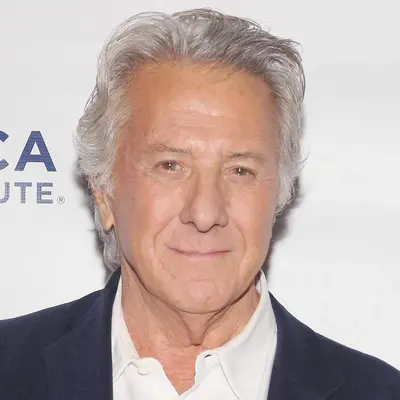
89 years old
Who Is Dustin Hoffman?
Dustin Lee Hoffman, born August 8, 1937, is an American actor and filmmaker. As one of the key actors in the formation of New Hollywood, he is known for his versatile portrayals of antiheroes and emotionally vulnerable characters.
Actor Robert De Niro described him as “an actor with the everyman’s face who embodied the heartbreakingly human.”
His career has earned him numerous accolades, including two Academy Awards, four BAFTA Awards, five Golden Globe Awards, and two Primetime Emmy Awards. Furthermore, he has received the Cecil B. DeMille Award in 1997, the AFI Life Achievement Award in 1999, and the Kennedy Center Honors Award in 2012.
With a career spanning over six decades, Dustin Hoffman remains one of the greatest actors in the history of American cinema.
Early Life: Jazz, Odd Jobs, and the Stage That Called His Name
Born Into a Show Business Family
Dustin Lee Hoffman was born in Los Angeles in 1937. His mother, Lillian Gold, was a jazz pianist. His father, Harry Hoffman, was a props supervisor and set decorator at Columbia Pictures.
He grew up in a Jewish family with roots from Ukraine, Russia-Poland, and Romania. Growing up with his older brother Ronald Hoffman, he initially aspired to be a jazz pianist like his mother before discovering acting.
Creativity ran deep in the Hoffman household. However, Dustin’s path to the arts was far from a straight line.
School Days: The Unlikely Performer
Hoffman found that comedy routines at the expense of his teachers won attention and approval from other students. His height won him the part of Tiny Tim in the John Burroughs Junior High School production of A Christmas Carol.
At Los Angeles High School, he turned to tennis, lifted weights, ran track, and began studying classical piano. He graduated from Los Angeles High School in 1955 and attended Santa Monica City College but dropped out after a year owing to poor grades.
Discovering Acting at Pasadena Playhouse
He chose acting since he did not want to work or serve in the military, and received two years of training at The Pasadena Playhouse.
At Pasadena Playhouse, Hoffman got acquainted with Gene Hackman, who was struggling to land decent roles at that time. He did not exactly excel in his studies there. He and his friend Gene Hackman were jointly voted “Least Likely to Succeed.”
That prediction, of course, aged very poorly.
New York: Odd Jobs, Roommates, and a Dream
He followed Hackman to New York, rooming with him and later with another aspiring actor, Robert Duvall, taking odd jobs that included coat-check clerk, fragrance tester, and typist.
He also worked as a janitor in a dance studio, dishwasher, and sold toys at Macy’s. Therefore, for seven years, the future Oscar winner lived the scrappy life of a New York actor — surviving on grit, passion, and the conviction that his moment would come.
Hoffman studied acting with Lee Strasberg, Lonny Chapman, and Barney Brown, training rigorously in the Method acting tradition that would define his entire career.
Broadway Debut (1961)
Hoffman made his Broadway debut in A Cook for Mr. General in 1961. He followed this with a string of off-Broadway and stage productions. His performance in the 1966 play Eh? garnered him both a Theatre World Award and a Drama Desk Award.
The New York stage gave him his foundation. However, it was Hollywood that gave him his legend.
Career Breakthrough: The Graduate Changes Everything (1967)
A Role That Rewrote the Rules
Hoffman’s first major film role was in The Graduate, released in 1967, where he played Benjamin Braddock — a recent college graduate drifting aimlessly into an affair with an older married woman.
This role propelled Hoffman, who was 30 at the time, to stardom after beating out other actors for the part. The Graduate became a hit due to its portrayal of a generation’s alienation, and Hoffman’s performance was widely praised.
His breakout role as Benjamin Braddock marked the beginning of a remarkable career. Moreover, it launched an entirely new model of Hollywood leading man — flawed, ordinary-looking, and emotionally raw.
The 1960s and 1970s: Building a Legend Film by Film
Midnight Cowboy (1969): A Second Oscar Nomination
He co-starred in Midnight Cowboy in 1969 alongside Jon Voight. The film won the Academy Award for Best Picture. Hoffman received a BAFTA Award for his performance.
He played Ratso Rizzo — one of cinema’s most beloved antiheroes. It was a grimy, desperate, deeply human portrait that confirmed he was no one-hit wonder.
Expanding His Range Through the 1970s
Hoffman gained further recognition in the 1970s, playing a variety of antiheroes. His films during this decade demonstrated extraordinary range:
- Little Big Man (1970) — played a 121-year-old survivor of the Battle of the Little Bighorn
- Straw Dogs (1971) — portrayed a quiet intellectual forced into violence
- Lenny (1974) — brought controversial comedian Lenny Bruce to life on screen
- All the President’s Men (1976) — played journalist Carl Bernstein in the landmark Watergate drama
In doing so, he set the reputation of the actor who can play any role like a master.
The Career-Defining Roles: Oscars, Laughter, and Tears
Kramer vs. Kramer (1979): The First Oscar Win
In Kramer vs. Kramer, Hoffman explored the meaning of modern manhood and received both the Oscar and the Golden Globe for his troubles.
The film tells the story of a married couple’s divorce and its impact on everyone involved, including the couple’s young son. His co-star Meryl Streep also won an Oscar for the same film. Together, they created one of cinema’s most emotionally authentic works.
Tootsie (1982): A Landmark in Comedy
In 1982, Hoffman starred in the comedy Tootsie as Michael Dorsey, a down-and-out actor who must dress up as a woman to find steady employment on a daytime soap opera. Tootsie earned ten Academy Award nominations, including Hoffman’s fifth nomination. The film grossed nearly $100 million during its theatrical release.
He challenged the borders of manhood and the meaning of humanity in Tootsie, copping another Golden Globe.
Death of a Salesman (1984): Stage to Screen Triumph
His much-lauded performance as Willy Loman in the Broadway revival of Arthur Miller’s Death of a Salesman in 1984 was adapted for television the following year. It earned Hoffman an Emmy Award and a Golden Globe Award.
This dual conquest of stage and screen remains one of the most impressive achievements of his career.
Rain Man (1988): The Second Oscar Win
Rain Man, where he played an autistic brother to Tom Cruise in his own finest role, brought Hoffman both the Oscar and the Golden Globe.
Rain Man became one of the highest-grossing films of the decade and highlighted his skill in nuanced emotional portrayals. His portrayal of Raymond Babbitt remains one of the most studied and celebrated performances in film history.
The 1990s and 2000s: From Captain Hook to Master Shifu
Blockbusters and Bold Choices
The 1990s brought Dustin Hoffman into blockbuster territory. This decade saw Hoffman diversify into blockbusters and voice work, including Captain Hook in Hook (1991) and a government operative in Wag the Dog (1997) — another Oscar-nominated performance.
In the 2000s, Hoffman appeared in Finding Neverland (2004), I Heart Huckabees (2004), Meet the Fockers (2004), Stranger than Fiction (2006), and Perfume: The Story of a Murderer (2006).
Kung Fu Panda (2008–2024): Master Shifu
He voiced Master Shifu in Kung Fu Panda (2008), winning an Annie Award, and reprised the role in Kung Fu Panda 2 (2011), Kung Fu Panda 3 (2016), and Kung Fu Panda 4 (2024).
The Kung Fu Panda animated franchise introduced his talents to younger audiences while maintaining his dramatic output. It proved that even in voice acting, Hoffman brought unmistakable depth and wisdom to every syllable.
The 2010s and Beyond: Director, Emmy Winner, and Still Going Strong
Directorial Debut: Quartet (2012)
In the 2010s, Hoffman starred in the HBO series Luck (2012) and made his directorial debut with Quartet (2012). The film starred Maggie Smith and was warmly received as a gentle, elegant tribute to musicians in their later years.
Emmy Award for Esio Trot (2015)
He appeared in Esio Trot (2015), earning an Emmy Award, based on Roald Dahl’s beloved novella. Additionally, he starred in Sam & Kate (2022) with Sissy Spacek and his son Jake Hoffman.
Megalopolis (2024): Francis Ford Coppola’s Epic
Hoffman reprised his voice role as Master Shifu in Kung Fu Panda 4, released in 2024. That same year, he appeared in Francis Ford Coppola’s Megalopolis.
Megalopolis premiered at the 2024 Cannes Film Festival. Hoffman played Nush “The Fixer” Berman in the ambitious dystopian epic — proof that, even at 86, he remains drawn to daring, visionary cinema.
Tuner (2025) and Upcoming Projects
Hoffman most recently completed the thriller Tuner and wrapped production on the drama The Revisionist in Louisville, Kentucky. The Revisionist follows a successful novelist who blurs the lines between reality and fiction by manipulating those around her into fictional characters, resulting in secrets, lies, and betrayal.
This marked his return to filming in Kentucky, where he previously shot portions of Rain Man decades earlier. He is also attached to Peter Greenaway’s Tower Stories and the upcoming Diamond. Dustin Hoffman, at 87 years old, is still filming.
Acting Style: The Method Behind the Magic
Dustin Hoffman is one of cinema’s most devoted Method actors. His approach is legendary. He has a reputation for being difficult to work with — the old joke goes that you don’t direct Dustin Hoffman, he directs himself — but this is tolerated because his suggestions and demands are made by someone who cares deeply about his work, and they often help his films become better.
His dedication to characters has produced some of the most memorable on-set stories in Hollywood history. For Marathon Man (1976), he famously stayed awake for days to portray an exhausted character — prompting co-star Laurence Olivier to ask him why he did not simply try acting. For Kramer vs. Kramer, he improvised confrontations with co-star Meryl Streep to generate real emotional tension on camera.
Hoffman helped introduce a new type of Hollywood leading man — average-looking but emotionally explosive. Because of him, cinema made room for authenticity over glamour. That contribution alone is immeasurable.
Personal Life: Family, Faith, and Longevity
Two Marriages and Six Children
Hoffman married Anne Byrne, a ballerina, on May 4, 1969. They divorced on October 6, 1980. He then married Lisa Gottsegen, an attorney, on October 21, 1980.
His children include Karina (stepchild from first marriage), Jenny (from first marriage), and Jacob, Rebecca, Max, and Alexandra from his second marriage.
He has been married to attorney Lisa Gottsegen since October 12, 1980. Their marriage has endured for over four decades — a quiet, private counterpoint to his intensely public career.
Faith, Heritage, and Identity
His ethnicity is Jewish (Ashkenazi). Hoffman’s religion is Judaism, reflecting the cultural and family traditions of his upbringing that emphasized intellectual curiosity, resilience, and artistic expression.
His Own Words
“I don’t like the fact that I have to get older so fast,” Hoffman has said. “But I like the fact that I’m aging so well.”
With more than 90 screen credits and counting, he is aging very, very well indeed.
Career Timeline at a Glance
| Year | Title | Role / Notable |
|---|---|---|
| 1961 | A Cook for Mr. General | Broadway debut |
| 1966 | Eh? | Drama Desk Award winner |
| 1967 | The Graduate | Breakthrough; 1st Oscar nomination |
| 1969 | Midnight Cowboy | 2nd Oscar nomination; BAFTA winner |
| 1970 | Little Big Man | 121-year-old Jack Crabb |
| 1974 | Lenny | Lenny Bruce |
| 1976 | All the President’s Men | Carl Bernstein |
| 1979 | Kramer vs. Kramer | 1st Academy Award win |
| 1982 | Tootsie | Michael Dorsey / Dorothy Michaels |
| 1984 | Death of a Salesman | Willy Loman — Emmy & Golden Globe |
| 1988 | Rain Man | 2nd Academy Award win |
| 1991 | Hook | Captain Hook |
| 1997 | Wag the Dog | 7th Oscar nomination |
| 2008 | Kung Fu Panda | Master Shifu — Annie Award winner |
| 2012 | Quartet | Directorial debut |
| 2015 | Esio Trot | Emmy Award winner |
| 2024 | Kung Fu Panda 4 | Master Shifu (reprise) |
| 2024 | Megalopolis | Nush “The Fixer” Berman |
| 2025 | Tuner | Henry |
Major Awards Summary
| Award | Category | Film | Year | Result |
|---|---|---|---|---|
| Academy Award | Best Actor | Kramer vs. Kramer | 1980 | Won |
| Academy Award | Best Actor | Rain Man | 1989 | Won |
| Academy Award | Best Actor | The Graduate | 1968 | Nominated |
| Academy Award | Best Actor | Midnight Cowboy | 1970 | Nominated |
| Academy Award | Best Actor | Lenny | 1975 | Nominated |
| Academy Award | Best Actor | Tootsie | 1983 | Nominated |
| Academy Award | Best Actor | Wag the Dog | 1998 | Nominated |
| Golden Globe | Best Actor | Kramer vs. Kramer | 1980 | Won |
| Golden Globe | Best Actor | Tootsie | 1983 | Won |
| Golden Globe | Best Actor | Rain Man | 1989 | Won |
| Emmy Award | Best Actor | Death of a Salesman | 1985 | Won |
| Emmy Award | Best Actor | Esio Trot | 2015 | Won |
| Annie Award | Voice Acting | Kung Fu Panda | 2009 | Won |
| Cecil B. DeMille Award | Lifetime Achievement | — | 1997 | Received |
| AFI Life Achievement Award | Lifetime Achievement | — | 1999 | Received |
| Kennedy Center Honors | Lifetime Achievement | — | 2012 | Received |