Albert Einstein
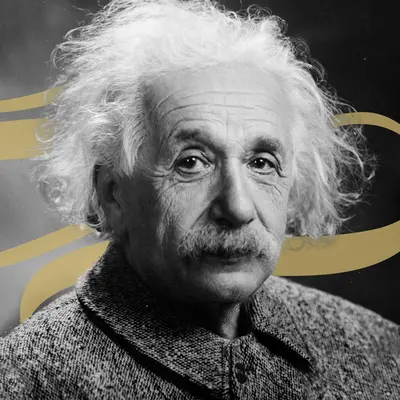
Who Was Albert Einstein?
Albert Einstein (14 March 1879 – 18 April 1955) was a German-born theoretical physicist, widely acknowledged to be one of the greatest and most influential physicists of all time.
Einstein is best known for developing the theory of relativity. He also made important contributions to the development of quantum mechanics. Relativity and quantum mechanics together form the two pillars of modern physics.
He received the 1921 Nobel Prize in Physics “for his services to theoretical physics, and especially for his discovery of the law of the photoelectric effect” — a pivotal step in the development of quantum theory.
His work did not just change science. It changed how every human being understands space, time, light, and existence itself.
Early Life: A Curious Child in Ulm
Birth and Family Background
Albert Einstein’s parents were secular, middle-class Jews. His father, Hermann Einstein, was originally a featherbed salesman and later ran an electrochemical factory with moderate success. His mother, the former Pauline Koch, ran the family household. He had one sister, Maria — who went by the name Maja — born two years after Albert.
Einstein would write that two “wonders” deeply affected his early years. The first was his encounter with a compass at age five. He was mystified that invisible forces could deflect the needle. This would lead to a lifelong fascination with invisible forces.
That childhood fascination never left him. It followed him into every equation, every discovery, and every revolution he sparked.
A Turbulent School Journey
Einstein’s early years did not mark him as a genius. His parents worried because he was so slow to learn to speak. Although his family was Jewish, he attended a Catholic elementary school, where he did not excel.
He rebelled against the authoritarian attitude of some of his teachers and dropped out of school at 16. Because of failed business ventures, the family moved several times during Einstein’s childhood, finally to Italy when he was 15.
However, Einstein was not a poor student by ability. Contrary to popular belief, young Albert was a good student. He excelled in physics and mathematics. His real struggle was with rigid systems — not with ideas.
The Swiss Federal Polytechnic School
Einstein took an entrance exam for the Swiss Federal Polytechnic School in Zurich. While his performance in physics and math was excellent, his marks in other areas were subpar, and he did not pass the exam the first time. Therefore, he took additional courses to close the gap.
He was admitted to the Swiss Polytechnic in 1896. In 1901, he received his diploma to teach physics and mathematics.
It was during his time at the Polytechnic that Einstein met the woman who would become his first wife — fellow student Mileva Marić.
The Patent Office Years: Genius in Disguise
An Unexpected Job in Bern
Einstein could not find a teaching position and began work in a Bern patent office in 1901.
He moved to the Swiss capital in 1902 and started work at the Federal Office for Intellectual Property as an assistant examiner. His job was to evaluate patent applications for electromagnetic devices. He was appointed as a “provisional third-class expert.”
In hindsight, Einstein’s job at the patent office was a blessing. He would quickly finish analyzing patent applications, leaving him time to daydream about the vision that had obsessed him since he was 16: What would happen if you raced alongside a light beam?
Marriage to Mileva Marić (1903)
While at Zurich Polytechnic, Einstein fell in love with his fellow student Mileva Marić. The couple had an illegitimate daughter, Lieserl, born in early 1902, of whom little is known.
With a small but steady income for the first time, Einstein felt confident enough to marry Marić, which he did on January 6, 1903. Their children, Hans Albert and Eduard, were born in Bern in 1904 and 1910, respectively.
Behind the scenes, Mileva Marić calculated figures, argued theories, and wrote lectures for her husband. When he began teaching in Zurich, Marić wrote his lecture notes. She was a brilliant physicist in her own right — a fact history has only recently begun to acknowledge fully.
The Miracle Year: 1905
Four Papers That Shook the World
1905 is known as Einstein’s annus mirabilis — his miracle year. In 1905, Einstein published four groundbreaking papers. These outlined the theory of the photoelectric effect, explained Brownian motion, introduced special relativity, and demonstrated mass-energy equivalence.
Remarkably, Einstein published all four papers in the Annalen der Physik while working 48 hours a week at the Patent Office.
Paper 1: The Photoelectric Effect
One of the four papers explained the photoelectric effect, in which Einstein demonstrated the particle nature of light. This discovery proved that light behaves as both a wave and a particle. Furthermore, it laid the cornerstone for quantum theory. It was this single paper that ultimately won him the Nobel Prize in Physics in 1921.
Paper 2: Brownian Motion
One paper explained Brownian motion in terms of molecular kinetic energy. This work provided the first direct experimental proof that atoms physically exist — a matter of fierce debate among scientists at the time.
Paper 3: Special Theory of Relativity
Einstein first proposed his special theory of relativity in 1905 in his paper “On the Electrodynamics of Moving Bodies,” which took physics in an electrifying new direction. The theory explains that space and time are actually connected, and Einstein called this joint structure space-time.
Paper 4: E=mc²
His mass-energy equivalence formula E=mc², which arises from relativity theory, has been dubbed “the world’s most famous equation.”
This fourth paper showed that relativity theory led to E=mc², the first mechanism to explain the energy source of the Sun and other stars. In just a few characters, Einstein expressed the relationship between matter and energy that would eventually change the world — for both creation and destruction.
The General Theory of Relativity (1915)
Extending the Vision
Special relativity was just the beginning. Two years after proposing the special theory of relativity in 1905, Einstein realized that special relativity did not account for gravity or acceleration. Einstein spent the next eight years dealing with that problem.
By November 1915, Einstein completed the general theory of relativity, which accounted for gravity’s relationship to space-time.
Einstein considered this theory the culmination of his life’s research. He was convinced of the merits of general relativity because it allowed for a more accurate prediction of planetary orbits around the Sun, which fell short in Isaac Newton’s theory.
Proven by a Solar Eclipse (1919)
In 1915, Einstein published his general theory of relativity. It was confirmed experimentally during a solar eclipse in 1919 with observations of the deflection of light passing near the Sun.
That confirmation made headlines around the world. Overnight, Einstein became not just a scientist — but a global celebrity.
The Nobel Prize (1921)
Einstein received a Nobel Prize in 1921 for his work on the photoelectric effect. His work on relativity was still considered controversial at the time.
In the more recent letters, we find that Einstein had compassion and empathy for his first wife and their children. He offered a portion of his 1921 Nobel Prize winnings to support them. This detail reveals a man of more emotional complexity than legend often allows.
Fleeing Nazi Germany: A Refugee Genius
The Rise of Hitler and Anti-Semitism
In 1933, Einstein took on a position at the Institute for Advanced Study in Princeton, New Jersey, where he would spend the rest of his life. At the time, the Nazis, led by Adolf Hitler, were gaining prominence with violent propaganda in an impoverished post-World War I Germany. The Nazi Party influenced other scientists to label Einstein’s work “Jewish physics.”
Jewish citizens were barred from university work and other official jobs. Einstein himself was targeted to be killed. His house was seized. His name appeared on a list of enemies of the state.
He also renounced his German citizenship, which freed him from military service. He belonged to no country until he became a Swiss citizen in 1921. He later became a proud American citizen.
The Einstein-Szilárd Letter and the Atomic Bomb
Warning the World (1939)
In collaboration with Leo Szilárd, Einstein wrote a letter to President Roosevelt in 1939, warning of possible German nuclear weapons research and proposing that the United States begin its own research into atomic energy.
Roosevelt’s response was the Manhattan Project — a crash program to develop the atomic bomb before Hitler could. Einstein played no further role in the project.
Einstein played no role in the Manhattan Project, having been denied a security clearance in July 1940 due to his pacifist tendencies.
A Moment of Horror
Roosevelt died on April 12 before he could read Einstein’s follow-up letter. When Einstein learned in August that an atomic bomb had been detonated over the Japanese city of Hiroshima, he could only whisper, “Oh my God.”
He later regretted signing the letter to Roosevelt, saying: “Had I known that the Germans would not succeed in developing an atomic bomb, I would have done nothing.”
For the rest of his life, Einstein was a tireless advocate for bringing nuclear weapons under some form of international control.
Personal Life: The Man Beyond the Equations
Two Marriages
Einstein was married twice. He married Mileva Marić in 1903 and divorced her in 1919. He soon married his cousin, Elsa.
Three children came from his first marriage to Mileva Marić: a daughter, Lieserl, whose fate remains unknown, and sons Hans Albert and Eduard. Eduard developed schizophrenia and spent much of his life institutionalized.
In the more recent letters, Einstein expressed compassion and empathy for both his wives and his children. He wrote of his son Eduard: “The more refined of my sons, the one I considered really of my own nature, was seized by an incurable mental illness.”
Politics, Activism, and the FBI
Einstein was a committed socialist, pacifist, and Zionist. He supported civil rights, corresponded with W.E.B. Du Bois, and was surveilled by the FBI for his political associations.
Albert Einstein was already a world-famous physicist when the FBI started keeping a secret dossier on him in December 1932. By the time of Einstein’s death on April 18, 1955, that FBI file would be 1,427 pages long.
The Russell-Einstein Manifesto (1955)
As late as the spring of 1955, Einstein worked with Bertrand Russell to launch a project to start a worldwide movement among scientists to reverse the Cold War trend toward nuclear war. It was one of his final acts — a dying genius still fighting for peace.
Death and Legacy
Albert Einstein died on April 18, 1955, in Princeton, New Jersey, at the age of 76.
At Einstein’s request, the house has never been turned into a museum or public shrine. Today it is owned by the Institute for Advanced Study and is used as a private residence.
Einstein was a philosopher and a human rights activist as well as a scientist. As he presented Einstein at Medal Day exercises, Dr. Frederick Palmer Jr. of The Franklin Institute said: “The romance of his achievement has been such that mathematical physics has become popular with the public.”
His intellectual achievements and originality resulted in one simple truth: the name “Einstein” became synonymous with the word “genius.”
Key Scientific Contributions at a Glance
| Year | Discovery / Work | Significance |
|---|---|---|
| 1905 | Photoelectric Effect | Basis of quantum theory; Nobel Prize winner |
| 1905 | Brownian Motion | First proof of atomic existence |
| 1905 | Special Theory of Relativity | Unified space and time; introduced space-time |
| 1905 | E=mc² | Most famous equation in history |
| 1915 | General Theory of Relativity | Redefined gravity; confirmed in 1919 eclipse |
| 1917 | Cosmological Model | Applied relativity to model the universe |
| 1921 | Nobel Prize in Physics | Awarded for photoelectric effect |
| 1939 | Einstein-Szilárd Letter | Triggered the Manhattan Project |
| 1955 | Russell-Einstein Manifesto | Final plea for global nuclear disarmament |