Jung Dong-hyun
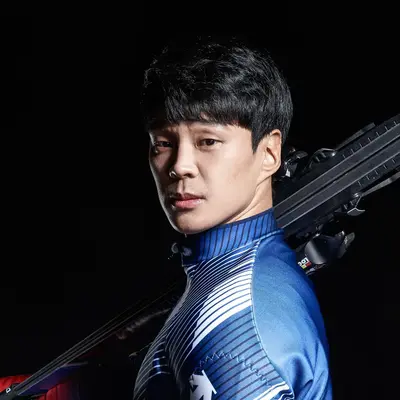
38 years old
Who Is Jung Dong-hyun?
Jung Dong-hyun (Korean: 정동현, born June 1, 1988) is an alpine skier from South Korea.
Jung Dong-hyun is an alpine skier who has competed for South Korea. He competed at the 2010, 2014, 2018, and 2022 Winter Olympic Games.
Furthermore, Jeong Dong-hyun set a record of participating in the Olympics four times in a row as a national alpine skier and is a leading alpine skier in Korea.
He won two gold medals in a row at the 2011 Astana-Almaty Winter Asian Games and the 2017 Sapporo Asian Winter Games. He also ranked 14th in the 2017 FIS Alpine World Cup holding the highest ranking in the FIS Alpine World Cup ever achieved by a Korean athlete.
Jung Dong-hyun is not simply a four-time Olympian. He is a pioneer. He is a record-breaker. Most importantly, he is the athlete who proved that South Korean alpine skiing could compete on the world stage.
Early Life: Born on the Slopes of Gangwon-do
Goseong-gun A Ski Resort Hometown
Jung Dong-hyun was born in Goseong-gun, Gangwon-do. He lived right in front of the now-defunct Goseong Alps Ski Resort.
Goseong-gun is a county in Gangwon Province the heart of South Korea’s mountainous east coast. It is a region defined by dramatic peaks, deep valleys, and a deeply felt connection to winter sport.
Growing up literally at the foot of a ski resort was not a coincidence. It was destiny. The mountains shaped Jung Dong-hyun before he ever stepped on a pair of skis professionally.
Jung, a native of Gangwon Province, noted that since the race at the 2018 Pyeongchang Olympics would be staged on a familiar course where he had been practicing, he would be able to show better results.
Therefore, competing on home snow at Pyeongchang was not just an Olympic moment for Jung Dong-hyun. It was a homecoming.
First Encounter With Skiing: Age Three
When he was three years old, he first encountered skiing and grew up playing on the ski slopes.
Three years old. Most children are still learning to balance on flat ground. Jung Dong-hyun was already on snow tumbling, learning, falling, and getting back up. This early relationship with the mountain gave him an instinctive feel for snow and speed that formal training alone could never replicate.
Gwangsan Elementary School: A School of Skiers
He started skiing in earnest when he entered the branch school of Gwangsan Elementary School. All of the students in the school around only 20 students were all skiers.
He had a natural physique, speed, and composure. He never missed first place in competition throughout elementary school.
Imagine attending a school where every single student competes on skis. Jung Dong-hyun did not just attend such a school. This extraordinary winning record as a young child was the first indication that something truly special was developing.
Injuries Begin Early: A Career-Long Battle
The bad news of his injury always followed him throughout his playing career. He suffered from a herniated disc since his third year of middle school. He also had to endure major five-pin surgery for a wrist injury while training for the national team.
This theme extraordinary talent shadowed by relentless injury would define Jung Dong-hyun’s entire career. However, each injury made his achievements more meaningful, not less. Furthermore, every time he returned to competition, he proved that his love for the sport was stronger than any medical setback could be.
Career: A Decade of Pioneering Achievement in Korean Alpine Skiing
Making the National Team and the 2009 Comeback
Jung made a national team comeback in 2009 and qualified for the 2010 Vancouver Olympics.
Making the South Korean alpine skiing national team is itself a remarkable achievement. The program demands technical excellence, physical power, and competitive results against the world’s finest skiers. Jung Dong-hyun earned his place through years of dedicated training and consistent performance.
The 2010 Vancouver Winter Olympics: Heartbreak Before the Start
During the 2010 Winter Olympics in Vancouver, a month before the opening of the Olympics, during a match at the National Winter Sports Festival, a ski blade hurt his thigh bone so deeply that he could see it. Immediately after muscle repair surgery, he pushed through the race but failed to finish and withdrew.
Just a week away from the Olympics, he suffered a thigh injury. He didn’t give up participating in his first Olympics but wasn’t able to complete his race.
This moment captures everything about Jung Dong-hyun’s character. A lesser athlete would have withdrawn entirely. He refused. Despite a surgically repaired thigh, he started his first Olympic race. He did not finish but he started. That decision, more than any medal, defines who he is.
The 2011 Asian Winter Games Astana-Almaty: Gold Medal No. 1
He won gold at the 2011 Astana-Almaty Winter Asian Games.
This was Jung Dong-hyun’s first major international gold medal. It confirmed that his Olympic promise interrupted so cruelly by injury in Vancouver was real. Furthermore, it gave South Korean alpine skiing its most significant result in a major multi-sport event at that point in time.
The 2014 Sochi Winter Olympics: Completing the Race
At the 2014 Sochi Games, Jung did finish his race in the giant slalom, but ranked 41st among 79 skiers.
Finishing was a victory in itself. After the heartbreak of Vancouver, simply completing an Olympic race was a milestone of personal and athletic significance. Additionally, ranking 41st of 79 in one of the world’s most competitive ski events placed Jung firmly within the competitive field at a world level.
The 2014–15 FIS World Cup Season: A South Korean First
In the 2014–15 season, he became the first South Korean alpine skier to reach the finals at an International Ski Federation (FIS) World Cup.
This is a landmark achievement in South Korean sports history. The FIS Alpine Ski World Cup is the most prestigious series in the sport drawing the world’s finest alpine skiers to compete across dozens of races throughout the winter season. Reaching the finals as a South Korean athlete for the very first time in national history is a breakthrough that deserves to be celebrated alongside any Olympic medal.
Knee Surgery (2015): Another Test of Character
Jung had knee surgery in 2015 but it didn’t slow down his race on snow.
A third major surgery. A third comeback. This is the pattern of Jung Dong-hyun’s career not a smooth, uninterrupted rise, but a constant cycle of achievement, injury, recovery, and return. Therefore, every race he has ever started represents not just athletic preparation but personal triumph over adversity.
The 2017 FIS Alpine Ski World Cup Zagreb: 14th Place and a National Record
He has qualified seven times to a World Cup second run in slalom, with his best result being 14th in Zagreb in 2017.
In the 2017 FIS World Cup, he ranked 14th holding the highest ranking in the FIS Alpine World Cup by a Korean athlete.
Fourteenth place at a World Cup race may not sound extraordinary in isolation. However, for South Korean alpine skiing, it was historic. No Korean skier had ever placed higher in a World Cup event. Furthermore, it was achieved in one of the most technically demanding disciplines slalom against the world’s elite racers.
The 2017 Asian Winter Games Sapporo: Gold Medal No. 2
He won gold at the 2017 Sapporo Asian Winter Games.
Two consecutive Asian Winter Games gold medals 2011 and 2017. These achievements confirmed Jung Dong-hyun as the dominant force in Asian alpine skiing across an entire decade. Additionally, his 2017 gold in Sapporo came just months before his most high-profile Olympic campaign on home snow.
The 2018 Pyeongchang Winter Olympics: The Homecoming
Racing on Home Snow
Jung said his goal for the Pyeongchang Olympics was to finish inside the top 10.
South Korea’s best performance in an Olympic alpine skiing event at that point came in 1998, when Hur Seung-Wook finished 21st in slalom. Jung felt he had narrowed the gap with others after training with world-class skiers. “If I continue training systematically, I think I’ll have better results,” he said.
The confidence of a man who had earned his place on the world stage. Jung Dong-hyun arrived at Pyeongchang not simply hoping to participate he arrived aiming to make history on his own mountain.
The Mixed Team Event: A 9th Place Finish for South Korea
At the 2018 Pyeongchang Winter Olympics, Jung Dong-hyun competed in the alpine skiing Mixed Team Event alongside teammates Kim Dong-woo, Kang Young-seo, and Gim So-hui.
The team achieved a remarkable 9th place finish in the Mixed Team Event one of the most celebrated results in the history of South Korean alpine skiing at the Olympic Games. Furthermore, this team result showcased what years of national program development had achieved.
A Knee Ligament Injury at Pyeongchang
In 2018 Pyeongchang, he suffered a knee ligament injury.
Even on home soil in the most anticipated Olympic campaign of his career injury struck again. However, Jung Dong-hyun once again showed the determination that has defined every chapter of his story. He continued to compete where he could. hyun represented his nation. He refused to be defined by bad luck.
Slalom at Pyeongchang: 27th Place A National Record
The previous highest Olympic ranking was 27th in the slalom during the 2018 PyeongChang Winter Olympics. Koreans wrote the history of recording the highest Olympic ranking tie.
27th place in the Olympic slalom achieved while racing on injured knees, on home soil, in front of a Korean crowd. This result matched the best-ever South Korean Olympic alpine skiing finish at that point. Therefore, even in an Olympic campaign marked by injury and physical struggle, Jung Dong-hyun delivered a performance for the history books.
The 2022 Beijing Winter Olympics: Four in a Row
Jung Dong-hyun competed at the 2022 Winter Olympic Games in Beijing.
In the giant slalom at Beijing 2022, he failed to complete the race due to poor conditions at the stadium caused by heavy snow. He finished 21st in the slalom.
This made him the top Asian athlete in the FIS world rankings for both slalom and giant slalom.
Four consecutive Winter Olympics 2010, 2014, 2018, and 2022. This is a record-setting achievement in South Korean alpine skiing history. No other South Korean alpine skier has competed at four consecutive Games. Therefore, Jung Dong-hyun’s four-Olympics record stands as the ultimate testament to his longevity, dedication, and love for the sport.
The FIS Far East Cup: Six Cup Victories
Jung Dong-hyun competed in the 2020–21 season International Ski Federation (FIS) Far East Cup men’s slalom event and ranked first, winning a total of six Far East Cup events.
Six Far East Cup victories is a remarkable body of work. These competitions contested across the major ski resorts of East Asia represent the elite level of regional competition. Dominating them so comprehensively confirms Jung Dong-hyun’s status as Asia’s finest alpine skier of his generation.
Understanding Alpine Skiing: The Sport Jung Dong-hyun Mastered
Alpine skiing at the Olympic level is one of sport’s most technically and physically demanding disciplines. Competitors navigate steep mountain courses at extraordinary speeds requiring explosive power, perfect edge control, and ice-cold mental composure.
Jung Dong-hyun’s primary disciplines slalom and giant slalom are the sport’s most technical events. Slalom requires rapid, precise turns through closely spaced gates. Giant slalom demands a combination of speed, power, and carving technique across a longer, more open course.
Mastering both disciplines well enough to compete at four Olympic Games while recovering from multiple major surgeries is an achievement that places Jung Dong-hyun among the most resilient athletes South Korea has ever produced.
Complete Olympic Career Summary
| Year | Host City | Events Entered | Results |
|---|---|---|---|
| 2010 | Vancouver, Canada | Men’s Slalom | DNF (thigh injury surgery; started the race) |
| 2014 | Sochi, Russia | Men’s Giant Slalom | 41st of 79 |
| 2018 | Pyeongchang, South Korea | Men’s Slalom; Mixed Team Event | 27th (slalom Korean national record); 9th (Mixed Team) |
| 2022 | Beijing, China | Men’s Giant Slalom; Men’s Slalom | DNF (GS heavy snow); 21st (slalom) |
Complete Medal and Achievement Record
| Year | Competition | Location | Event | Result |
|---|---|---|---|---|
| 2011 | Asian Winter Games | Astana-Almaty, Kazakhstan | Slalom | 🥇 Gold |
| 2014–15 | FIS World Cup Season | Multiple venues | Slalom | First South Korean ever to reach FIS World Cup Finals |
| 2017 | FIS World Cup | Zagreb, Croatia | Men’s Slalom | 14th (South Korean national record) |
| 2017 | Asian Winter Games | Sapporo, Japan | Slalom | 🥇 Gold |
| 2018 | Pyeongchang Olympics | Pyeongchang, South Korea | Mixed Team Event | 9th (with Kim Dong-woo, Kang Young-seo, Gim So-hui) |
| 2018 | Pyeongchang Olympics | Pyeongchang, South Korea | Men’s Slalom | 27th (Korean Olympic national record at time) |
| 2020–21 | FIS Far East Cup | Multiple venues | Men’s Slalom | 🏆 1st Overall; 6 event wins |
Personal Life: The Quiet Champion From Gangwon-do
Jung Dong-hyun has kept his personal life largely private throughout his career. He is a man of the mountains born in Goseong-gun, trained on the slopes of Gangwon Province, and devoted entirely to the sport that has defined his life from the age of three.
Jung Dong-hyun reaffirmed his determination with words that capture his entire character: “I will do my best to improve my condition in the future so that I can enter the top 10 in the Olympics.”
This quiet, focused determination not seeking the spotlight, not chasing celebrity, simply working to be better than yesterday is the essence of who Jung Dong-hyun is. He was born in front of a ski resort. He will leave sport having transformed what it means to be a Korean alpine skier on the world stage.


