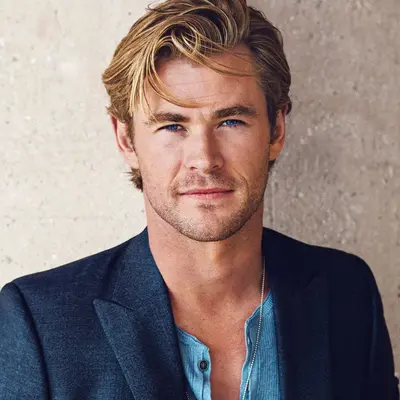
G. Love

53 years old
Who Is G. Love?
There is a sound unhurried, slightly worn at the edges, built on slide guitar, harmonica, and a rap cadence that feels like it wandered in from a 1930s juke joint that is impossible to mistake for anyone else. That sound belongs to G. Love, the stage name of Garrett Dutton, born October 3, 1972, in the Society Hill neighborhood of Philadelphia, Pennsylvania.
Dutton credits Bob Dylan and John Hammond Jr., as well as the then-contemporary hip-hop sounds of Run-DMC, the Beastie Boys, and Philadelphia’s own Schoolly D, as his primary musical influences, and that combination tells you almost everything you need to know about why G. Love sounds like nobody else. He is the rare artist who absorbed the Delta blues and 1990s rap with equal devotion and saw no contradiction between them.
Over more than three decades, G. Love has released more than fifteen albums, earned a Grammy nomination, collaborated with artists as diverse as Jack Johnson, Keb’ Mo’, Ben Harper, and The Avett Brothers, and maintained one of the most loyal live followings in American roots music. He is also a visual artist, a surfer, a graffiti writer, and a father. The full story is stranger and richer than the music alone.
Early Life: Philadelphia, the Blues, and the Streets
Garrett Dutton’s father, L. Garrett Dutton Jr., was a banking lawyer, while his mother worked as a professional cook. The family exposed their son to music early, taking him to see the Blues Brothers when he was just eight years old. That same year, he began learning to play guitar.
Dutton attended Germantown Friends School, a private school in Philadelphia, an uncommon choice for a blues and hip-hop singer. While his school friends were spinning Run-DMC, a teenager he met on the streets of Philadelphia named Waco Smith was playing Delta blues and introducing Dutton to artists like Blind Lemon Jefferson, Slim Harpo, and Muddy Waters. Dutton absorbed both worlds and began performing his own songs in school talent shows.
But it wasn’t just music that shaped him. Before he forged a path in music, Dutton was immersed in graffiti culture. “There was a lot of tagging and styles that were unique to Philadelphia,” he has said. He established his own tag “Look,” which he perfected by practicing obsessively. “When G. Love took off, that became my tag,” he says. “If you walk into the backstage of any small or medium-size club across the world, you’ll see my tags totally bombing all the backstage dressers.”
By sixteen, he was splitting his time between basketball and busking on the streets of Philadelphia, playing guitar for strangers. When people started throwing money into his case, the path forward clarified.
From Skidmore to Boston: Dropping Out and Finding the Sound
After high school, Dutton spent one year at Skidmore College before dropping out and relocating to Boston, where he worked as a fundraiser for Peace Action and played wherever and whenever he could.
It was in Boston that the sound truly took shape. Dutton met local producer Tom DeMille, whom he nicknamed T-Time, who had hung a flyer at a local music store describing his desire to combine blues influences like Muddy Waters, Howling Wolf, and Little Walter with modern music to create something new. Early recordings combined street influences with classic blues instrumentation, typically Dobro guitar over an early-1990s hip-hop beat, backed by synth bass and keys.
In January 1993, at a Boston bar called The Tam O’Shanter, Dutton met drummer Jeffrey “The Houseman” Clemens. The two began working as a duo, joined a few months later by bassist Jim “Jimi Jazz” Prescott. This trio became the house band on Mondays at The Plough and Stars in Cambridge, Massachusetts. G. Love & Special Sauce was born.
The Debut Album and the Rise of G. Love & Special Sauce
Later in 1993, G. Love and Special Sauce signed a record deal and released their self-titled debut album in 1994. Released on Epic/OKeh Records, the album reached number 32 on the Billboard Heatseekers chart and eventually went gold. Its breakout single, “Cold Beverage,” a woozy, funny, perfectly laid-back ode to a cold drink on a hot day, became an instant staple of ’90s alternative radio and a song that has followed Dutton everywhere he has played ever since.
The Philly act dropped a string of sloppy, funky hits that had one foot planted in the alt-rock ’90s and the other in a Southern juke joint in the ’30s. Critics and fans alike struggled to categorize them, which was entirely the point. They were blues, they were hip-hop, they were folk, they were funk, and they were all of those things at once.
The band followed their debut with Coast to Coast Motel (1995) and Yeah, It’s That Easy (1997), the latter a soul-influenced record that showcased collaborations with the All Fellas Band, Philly Cartel, King’s Court, and Dr. John. In 1999, the band returned to Philadelphia for the release of their fourth album, Philadelphonic, which featured an appearance by the group’s friend Jack Johnson. Philadelphonic was followed by Electric Mile in 2001, an album incorporating hip-hop, funk, psychedelia, blues, and soul in equal and ambitious measure.
The Jack Johnson Years and Solo Work
The friendship with Jack Johnson proved creatively fruitful. G. Love’s first solo album, The Hustle, was the first G. Love release under Jack Johnson’s Brushfire Records banner. Johnson had been a guest on the Special Sauce album Philadelphonic. G. Love performed a series of shows in 2004 with Jack Johnson and fellow Brushfire Records artist Donavon Frankenreiter, and the trio also found time to issue a live EP.
His 2006 solo album Lemonade, now widely regarded as one of his most beloved records welcomed collaborators including Jack Johnson, Ben Harper, Marc Broussard, and Blackalicious. Critics praised its warmth and ease, often calling it one of G. Love’s most effortlessly joyful projects, and fans have carried its songs with them for two decades. In 2025, G. Love & Special Sauce hit the road for a Lemonade 20th anniversary tour.
In 2010, G. Love joined forces with The Avett Brothers, who produced and are featured on his album Fixin’ to Die, released under the Brushfire label in February 2011. In 2009, he collaborated with Zap Mama on their album ReCreation, singing on the single “Drifting.” He has also made appearances on records by Slightly Stoopid and Donavon Frankenreiter, and has toured with Dave Matthews.
Grammy Nomination and the Return of Special Sauce
After a period of relative quiet, the original trio got back to business beginning with 2014’s Sugar, and since then G. Love & Special Sauce have consistently demonstrated their chemistry to be unique, also teaming up with collaborators including celebrated bluesman Keb’ Mo’, a co-producer of 2020’s The Juice. That album earned the band a Grammy nomination for Best Traditional Blues Album, a recognition that confirmed what devoted fans had always known.
In 2022, the band released Philadelphia Mississippi, produced by Luther Dickinson, another deep dive into the Southern blues traditions that have always anchored their sound.
Ode to R.L.: The Latest Chapter (2025)
Ode to R.L. was released on November 14, 2025, on G. Love’s own GLove Records. The album is a tribute to Hill Country blues legend R.L. Burnside, and represents something genuinely new in the G. Love catalog. Dutton has described it as “the first true hip-hop album his band has ever made,” a live band playing, but shaped into hip-hop tracks. “It’s the first time I’ve ever done that,” he says.
The album was born from one of the most powerful nights of G. Love’s career. “Logan had a bold vision for how to shape this project, and together we started creating what would become Ode to R.L. We began the process while R.L. was still with us, working on it in between road dates. After a six-month hiatus, we returned to the studio reinvigorated only to receive heartbreaking news the day after our first session back: R.L. had passed,” reflects G. Love. “That loss gave the project new weight and urgency. We knew we had to finish this album not just as a tribute, but as a living continuation of R.L.’s spirit and sound.”
Visual Art: The Other Side of Garrett Dutton
G. Love’s creative life has never been confined to music. His art grew directly out of the graffiti and hip-hop culture of Philadelphia in the late 1980s, where he was an aspiring graffiti writer. He has done unique hand-drawn setlists for thousands of his live shows. His paintings and painted furniture have been created and shown onstage for over fifteen years, and nearly all his works have sold almost exclusively from the stage during his live performances.
From November 2024 to February 2025, the Cape Cod Museum of Art in Dennis, Massachusetts hosted “It’s All Love: The Art of Garrett Dutton,” an exhibition connecting his graffiti roots to his current painting practice. Certain paintings gesture toward abstraction, creating a dialogue between text as image and the background of the painting, where the language of street art merges with that of historical and contemporary art. He has attended Art Basel as both a performer and a collector, acquiring work by artists including Shepard Fairey and Invader.
Personal Life
Dutton moved to Cape Cod from Boston in 2019 with his wife, Kelcey Dutton. He surfs, records music at Checkpoint East, and now lives in Orleans, Massachusetts. He is the father of four children: a son from a previous relationship and three young boys with Kelcey. G. Love remains an active surfer, a graffiti tagger of backstage dressing rooms worldwide, and an artist whose barn studio doubles as a surfboard storage locker.
He describes himself as a protest kid from his earliest years attending rallies in Washington, D.C. to protest the Iraq War while still in high school. He is vocal about his beliefs on social media, though he keeps his shows deliberately politics-free: “Anybody who wants to know how I feel about the world can listen to my lyrics and get a pretty clear picture,” he says.